How to Choose a Kettle YouWill Love Using Every Day
Some links on this page may be affiliate links. If you buy through one, we may earn a small commission at no extra cost to you. Images are AI-generated illustrations of ideas, not photos of the products.
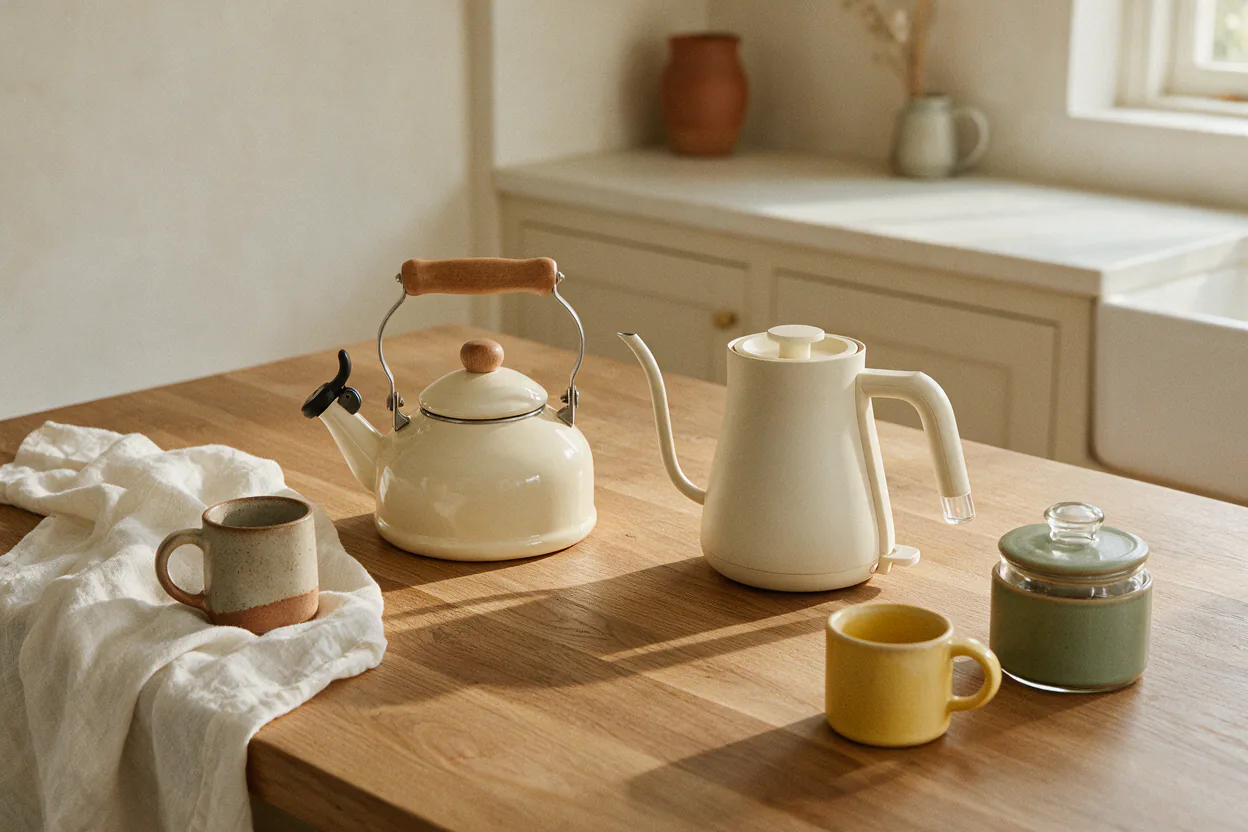
A kettle is one of the hardest working things in a kitchen. Many people use it several times a day, every day, for years. That makes it worth choosing carefully. Here is what to think about so you end up with a kettle that suits how you actually drink tea and coffee.
1Stovetop or electric
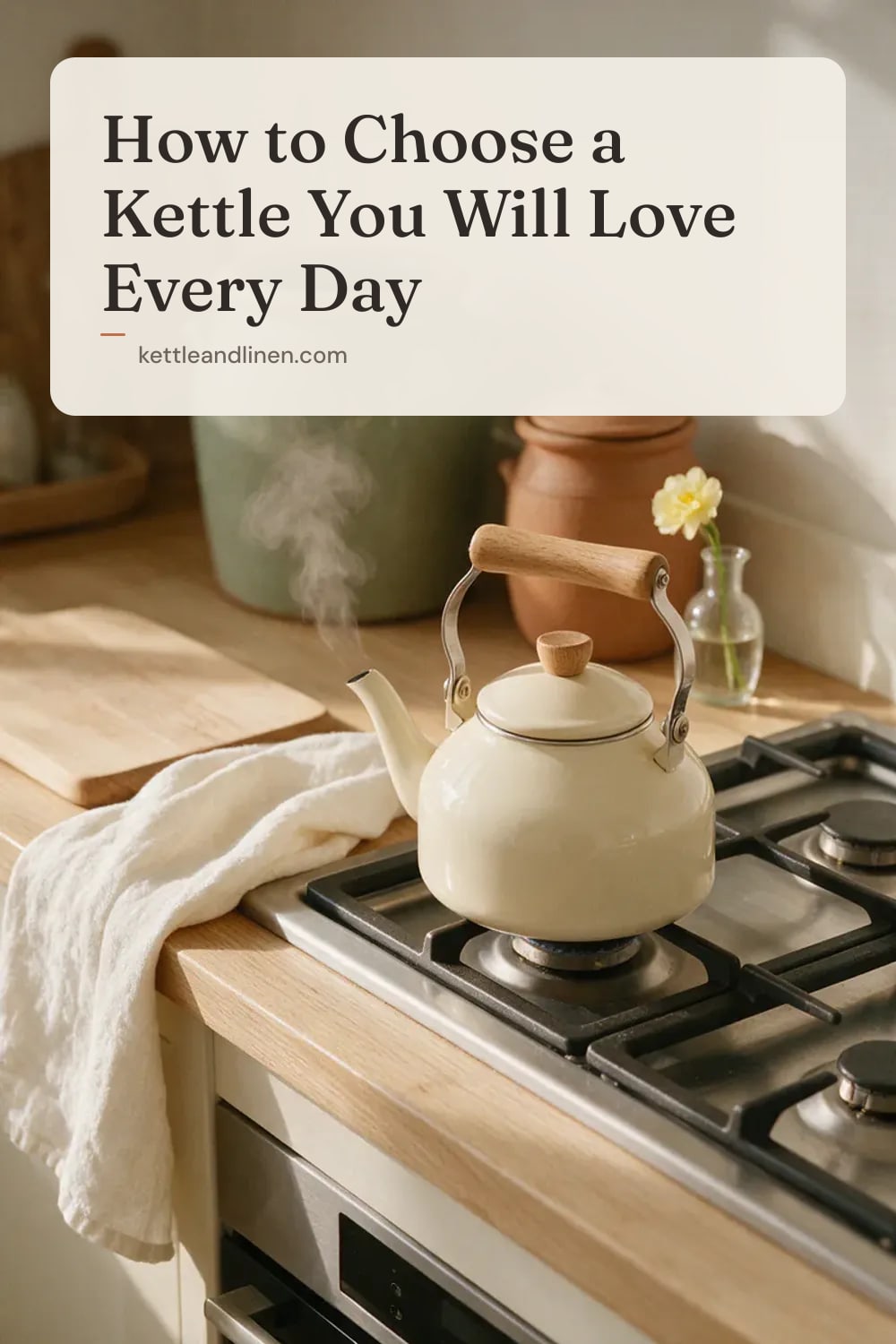
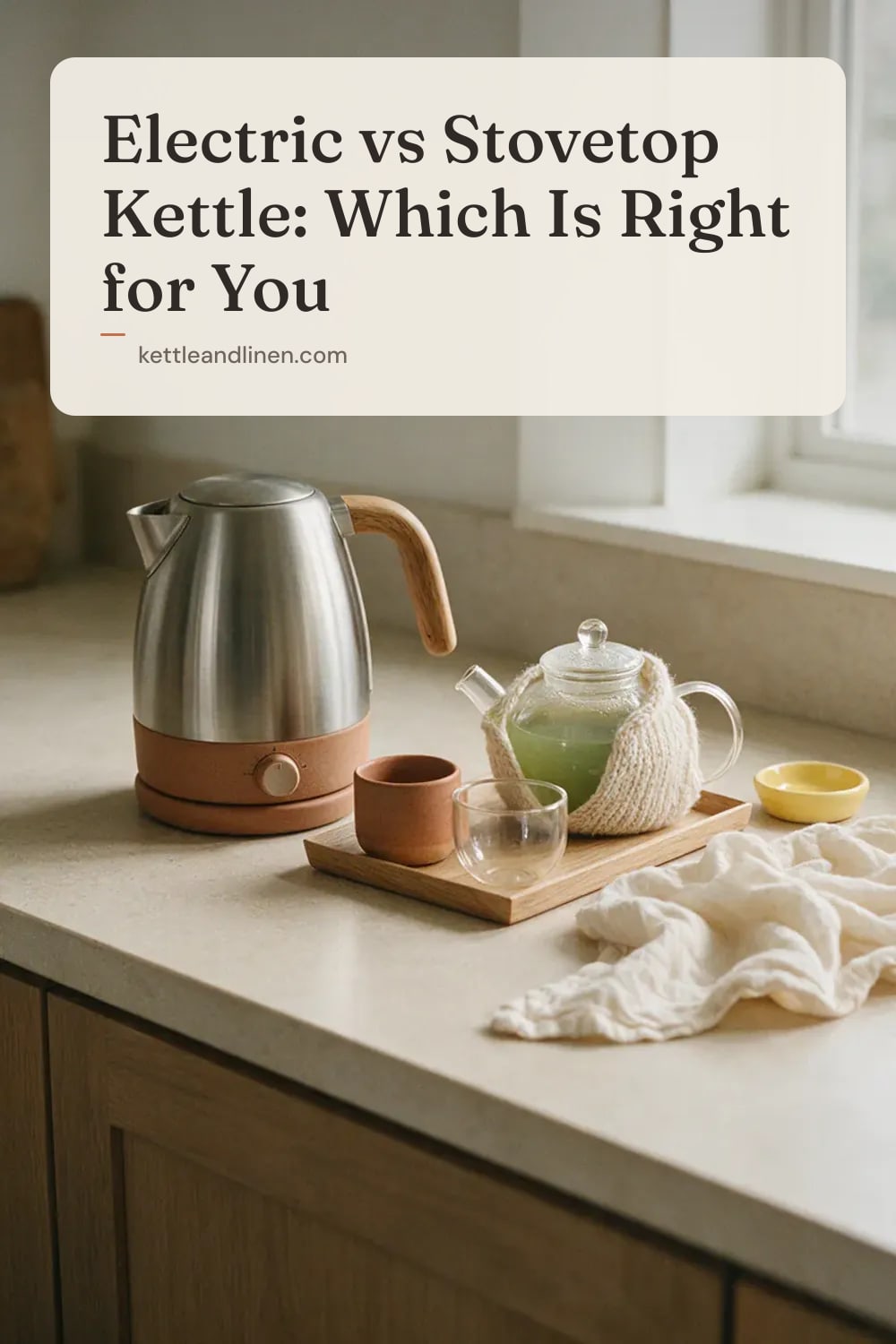
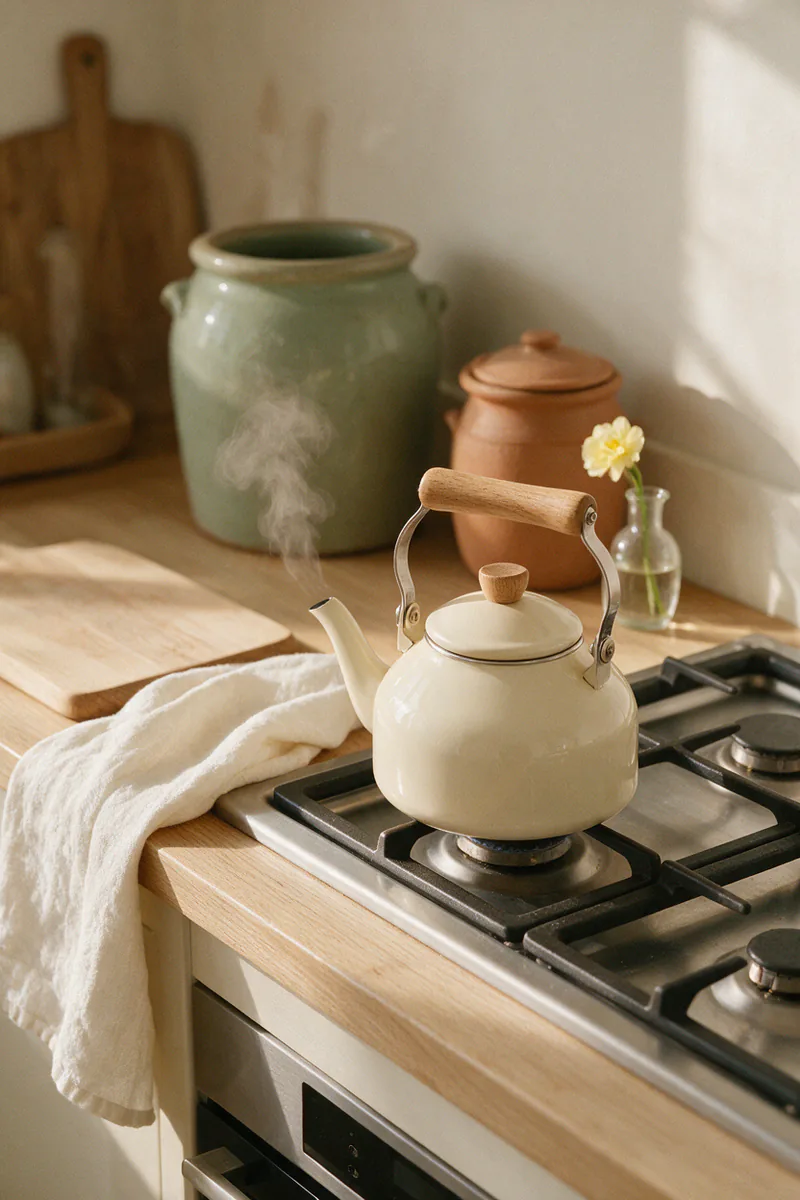
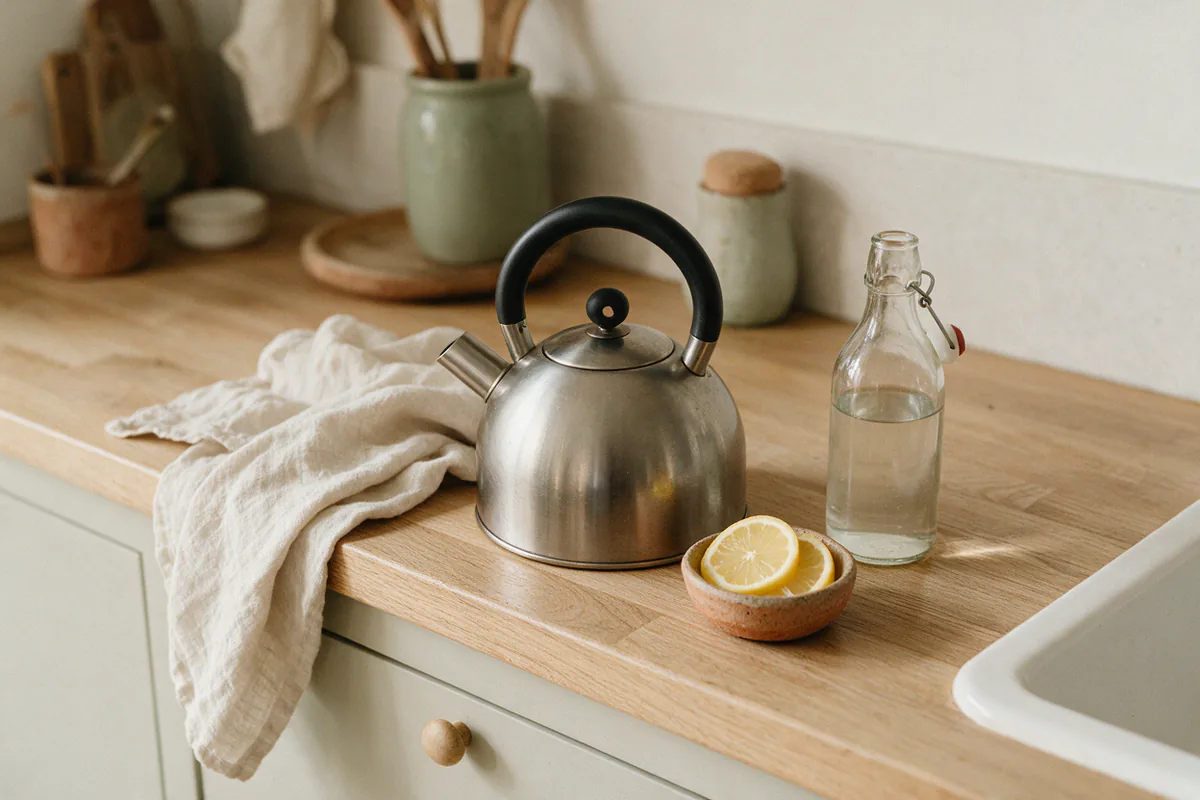
Electric kettles are fast, switch off on their own, and do not need a stove. They are the practical choice for most homes. Stovetop kettles are slower but beautiful, need no outlet, and whistle when the water is ready. They suit people who enjoy the ritual and keep the kettle on display.
2Choose the right spout
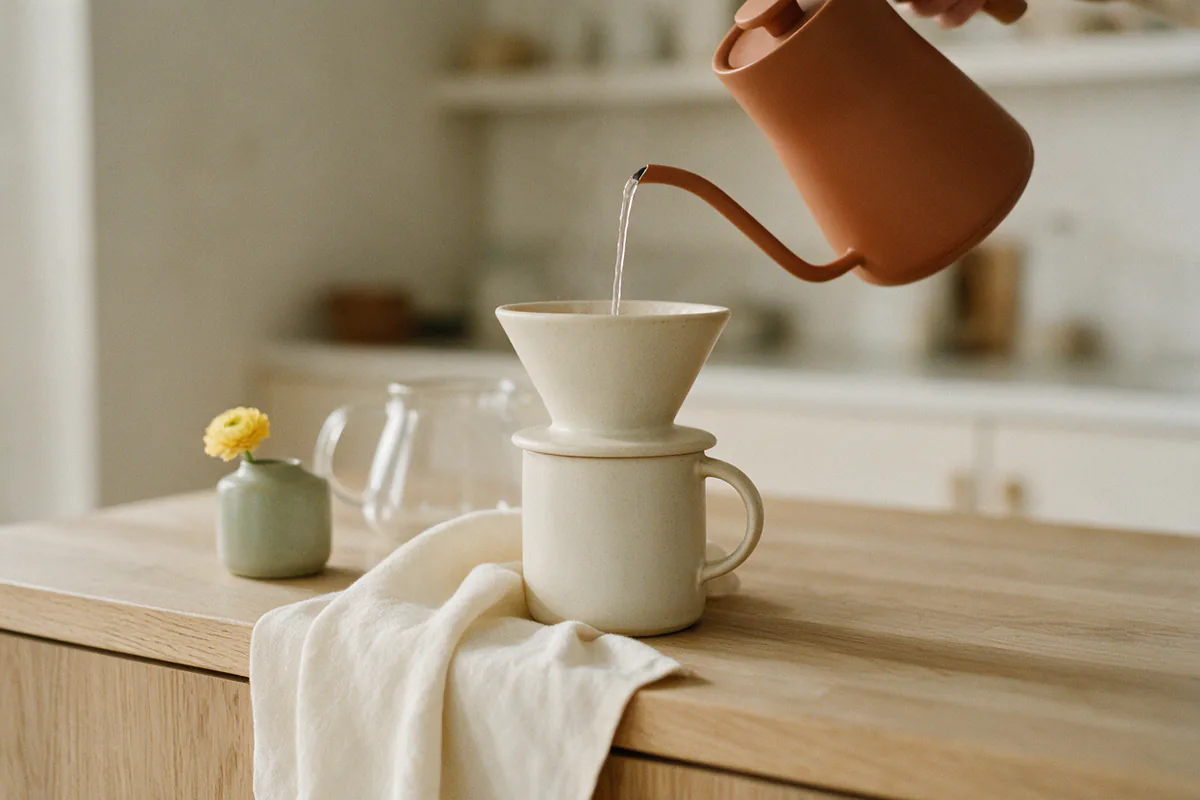
A classic spout pours quickly and is fine for tea, hot chocolate, and cooking. A gooseneck spout pours a slow, thin, controlled stream, which matters for pour-over coffee. If you only make tea, you do not need a gooseneck. If you love filter coffee, it makes a real difference.
3Think about temperature
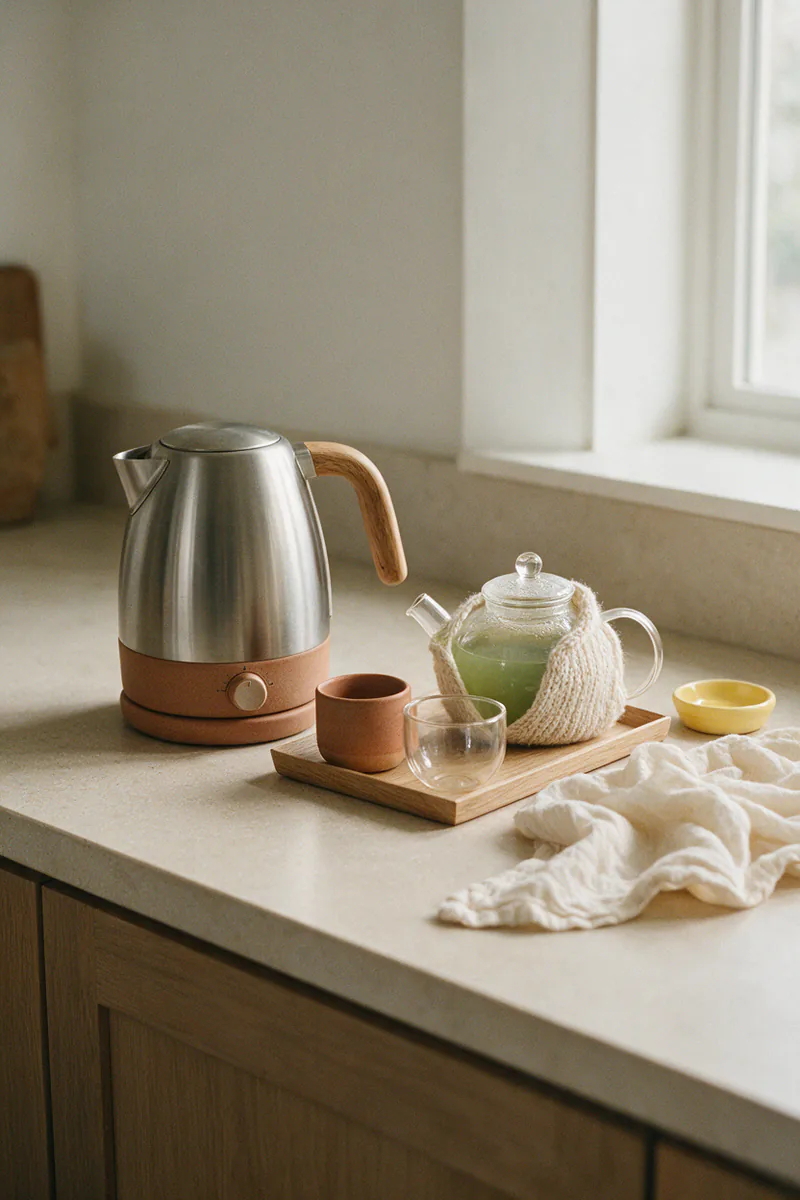
Different teas taste best at different temperatures. Green and white teas prefer water around 160 to 185°F, while black and herbal teas like it close to boiling. Electric kettles with temperature settings take the guesswork out of it. If you drink mostly black tea or coffee, a simple boil-only kettle is enough.
4Pick a sensible size
Most kettles hold between 1 and 1.7 liters. A smaller kettle heats faster and takes less counter space, which suits one or two people. A larger one is useful for families or for filling a teapot and a French press at once. Boiling only the water you need saves energy, whatever size you choose.
5Look at materials
Stainless steel is durable and easy to clean. Enamel looks lovely on a stove and comes in soft colors, but can chip if dropped. Glass lets you watch the water boil and shows scale clearly. For electric kettles, check that the inside, where water touches, is stainless steel or glass rather than plastic.
6Check the handle and lid
Lift the kettle in the shop if you can, or read reviews carefully. The handle should stay cool and feel steady when the kettle is full. A wide lid makes filling and cleaning easier. A lid that opens with a button keeps your hand away from steam.
7Plan for descaling
In areas with hard water, kettles build up white scale inside. It is harmless but makes water taste flat and slows heating. Once a month, fill the kettle halfway with equal parts water and white vinegar, or water with lemon, bring it to a boil, let it sit, then rinse well.
A quick way to decide
If you want speed and simplicity, choose an electric kettle with a classic spout. If you drink green tea or make pour-over coffee, choose an electric gooseneck with temperature control. If you love the look and sound of a kettle on the stove, choose an enamel or steel stovetop kettle.
How to start
Think about the last week. How many cups did you make, what kind of tea or coffee, and how many people were drinking? Those three answers point to the right type, spout, and size. Then choose the one you will enjoy seeing on your counter every morning.
Save it for later
Pin one of these to come back to the ideas when you need them.