Table Linen Guide: Tablecloth Sizes,Napkins and Runners
Some links on this page may be affiliate links. If you buy through one, we may earn a small commission at no extra cost to you. Images are AI-generated illustrations of ideas, not photos of the products.
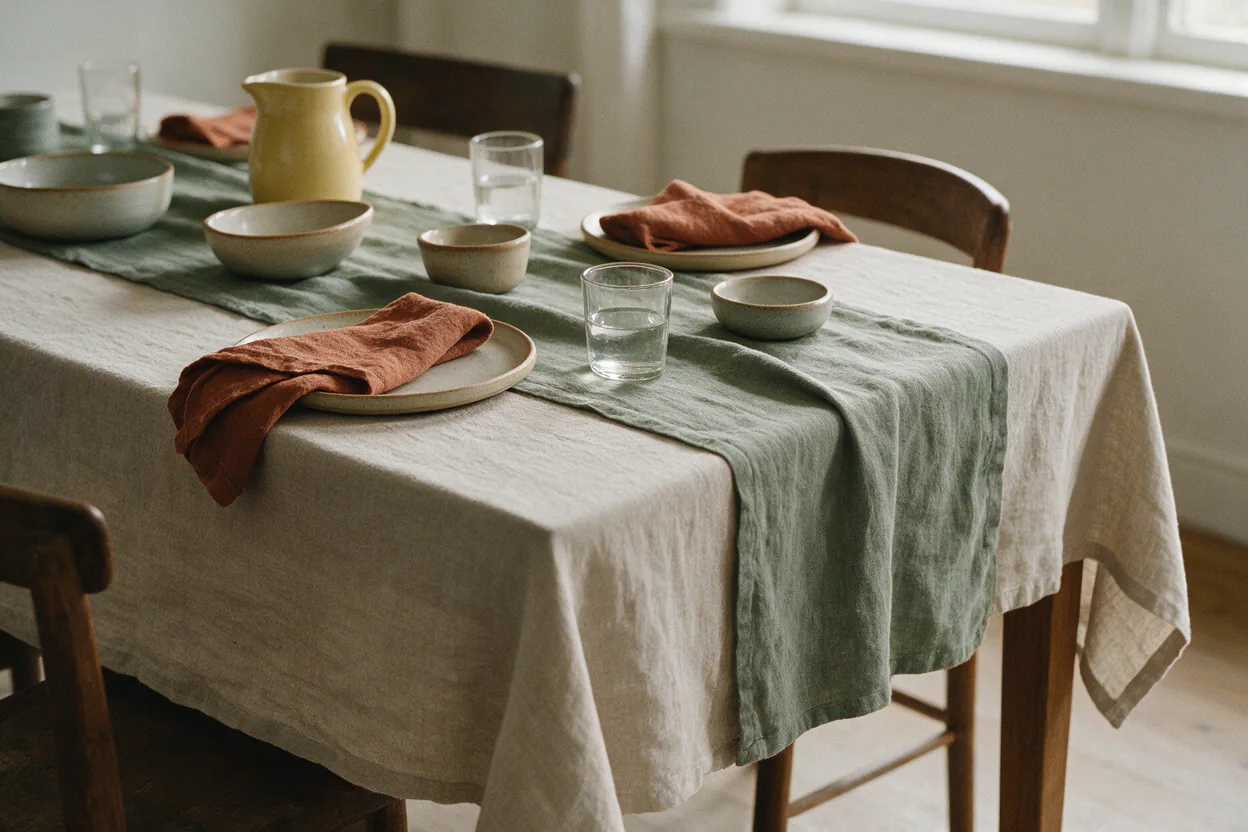
Table linen makes a meal feel cared for, but buying it can be confusing. Tablecloths come in dozens of sizes, napkins vary from small to huge, and runners can look elegant or awkward depending on the table. This guide covers the basics so you can choose pieces that fit and last.
1Measure your table first
Measure the length and width of your table top, or the diameter if it is round. Write it down before you shop. Most sizing mistakes happen because people guess. If your table has leaves, measure it at the size you use most often.
2Add the drop
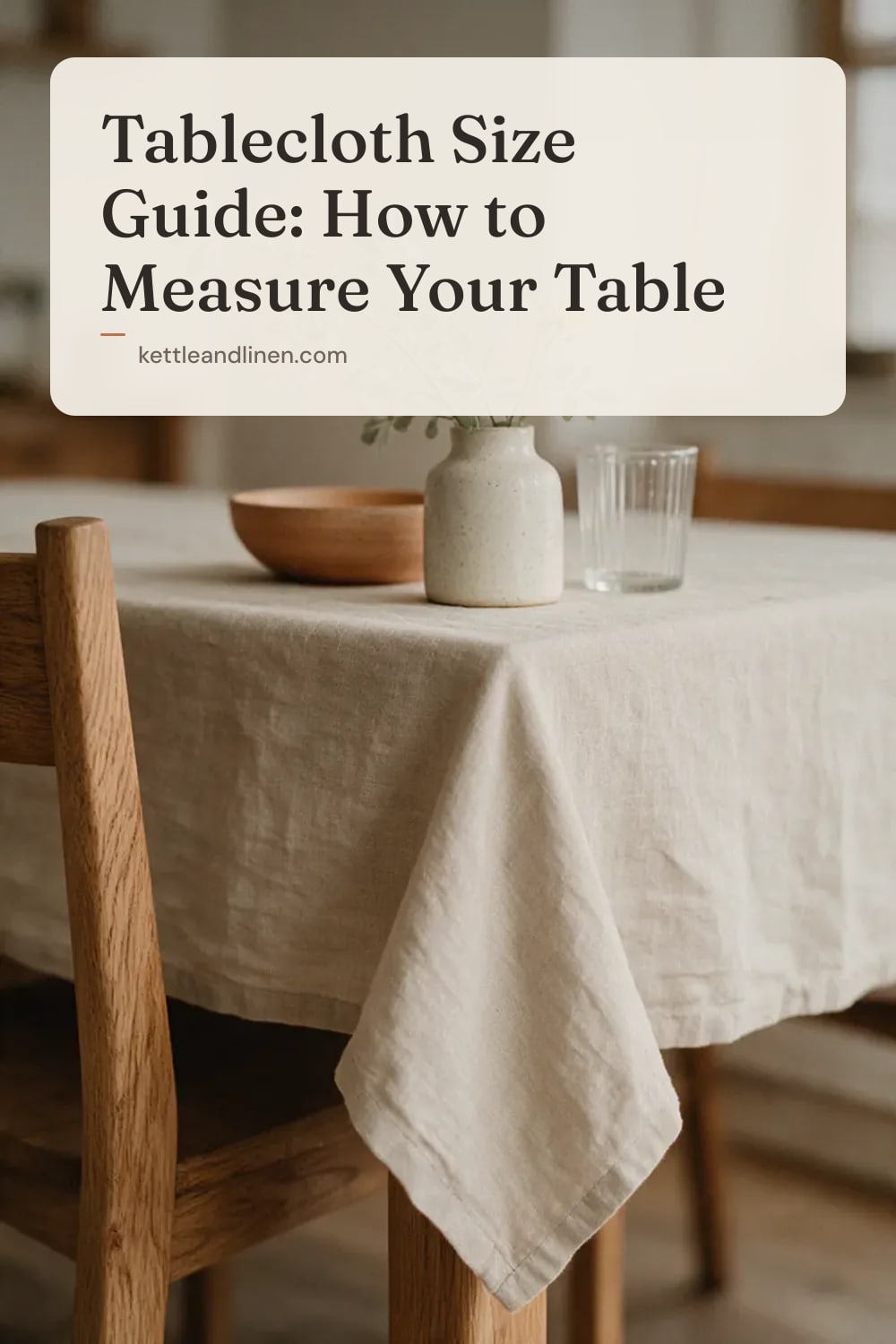
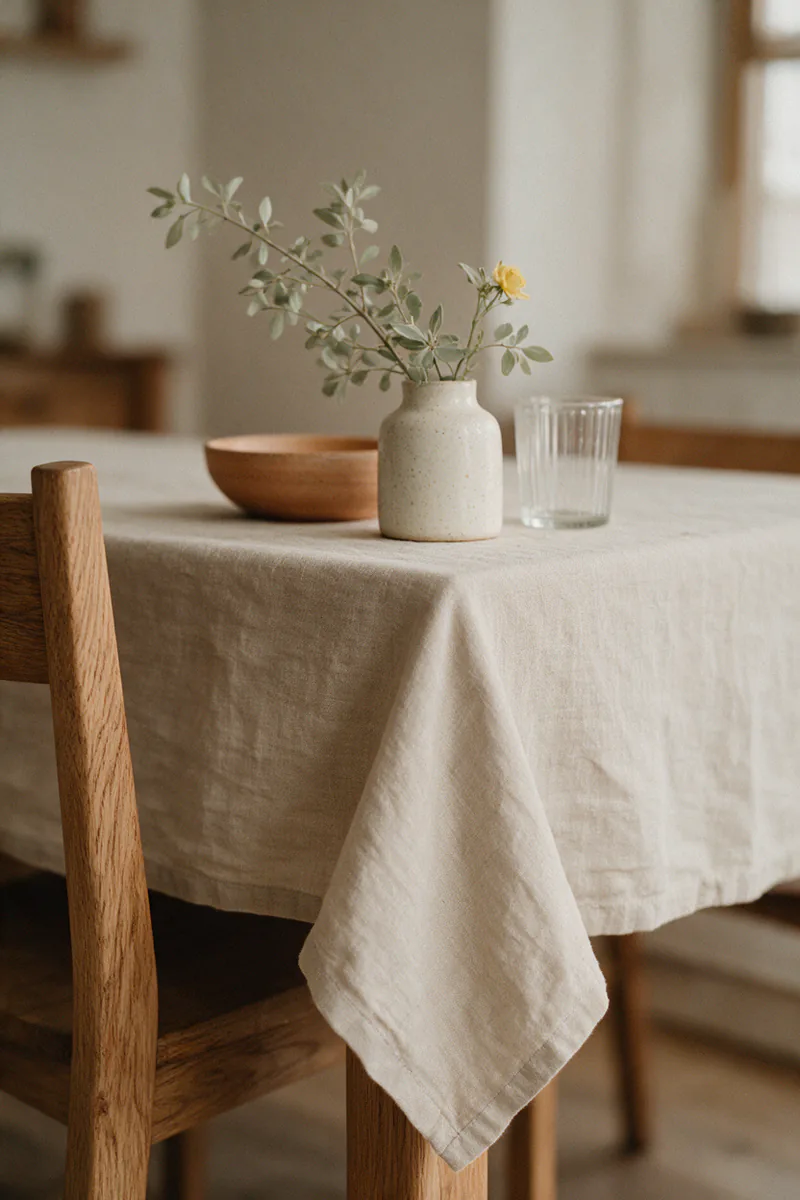
The drop is how far the cloth hangs over the edge. For everyday meals, a drop of 6 to 10 inches on each side looks relaxed and stays out of laps. For a formal dinner, a longer drop of 12 to 15 inches looks more elegant. Add twice the drop to each measurement. A 40 by 70 inch table with an 8 inch drop needs a cloth of about 56 by 86 inches.
3Match the shape
Choose a cloth in the same shape as the table. Round tables need round cloths, and oval tables look best with oval cloths. A rectangular cloth on a round table bunches at the corners. Square tables can take a square cloth or a round one for a softer look.
4Know when to use a runner
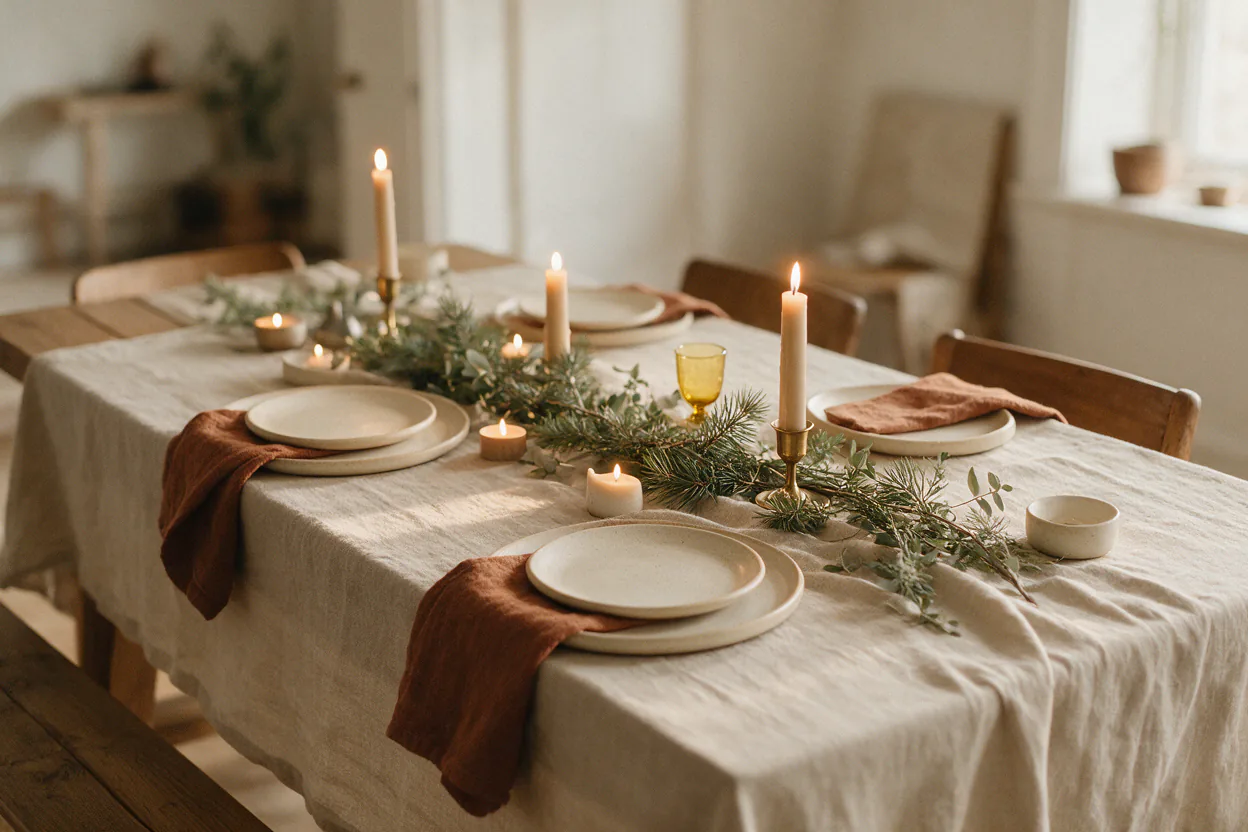
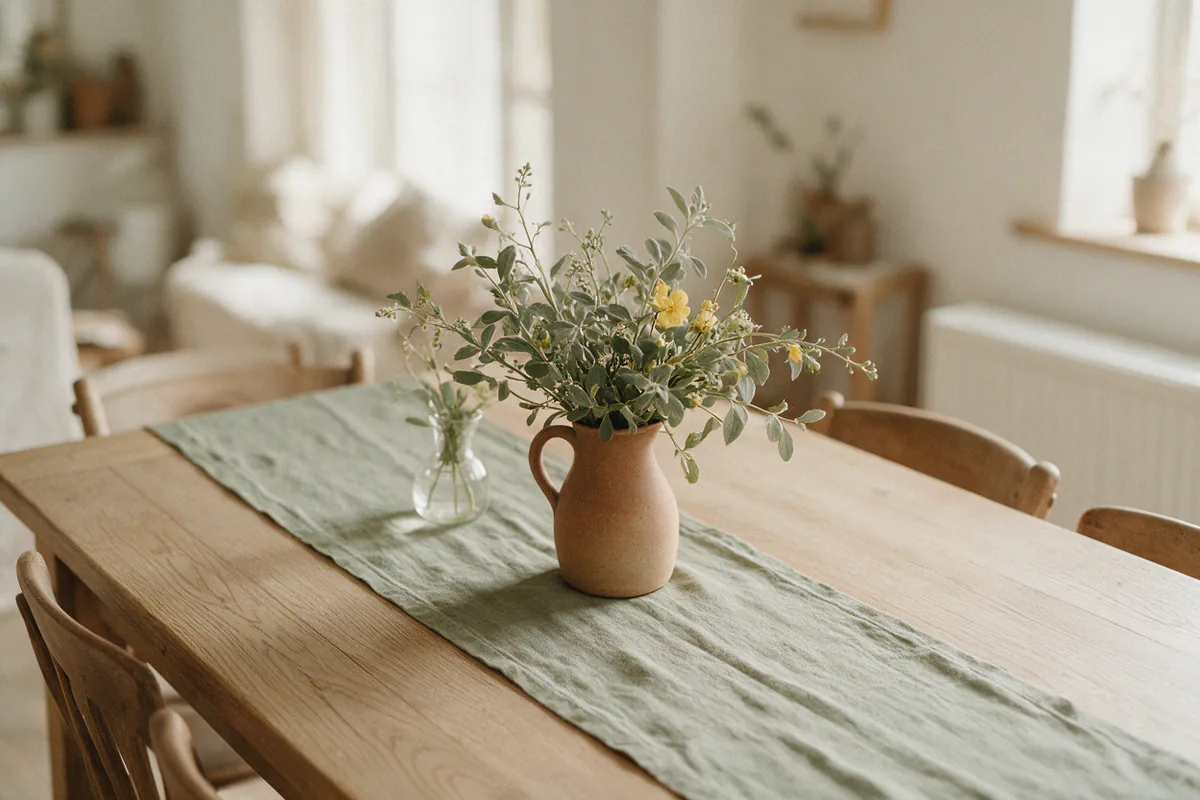
A runner is a narrow strip of fabric down the middle of the table. It shows off a beautiful wooden table while still adding color and texture. A runner should be about one third of the table’s width and hang 6 inches or so off each end, or stop just short of the edges for a modern look.
5Choose napkins that work
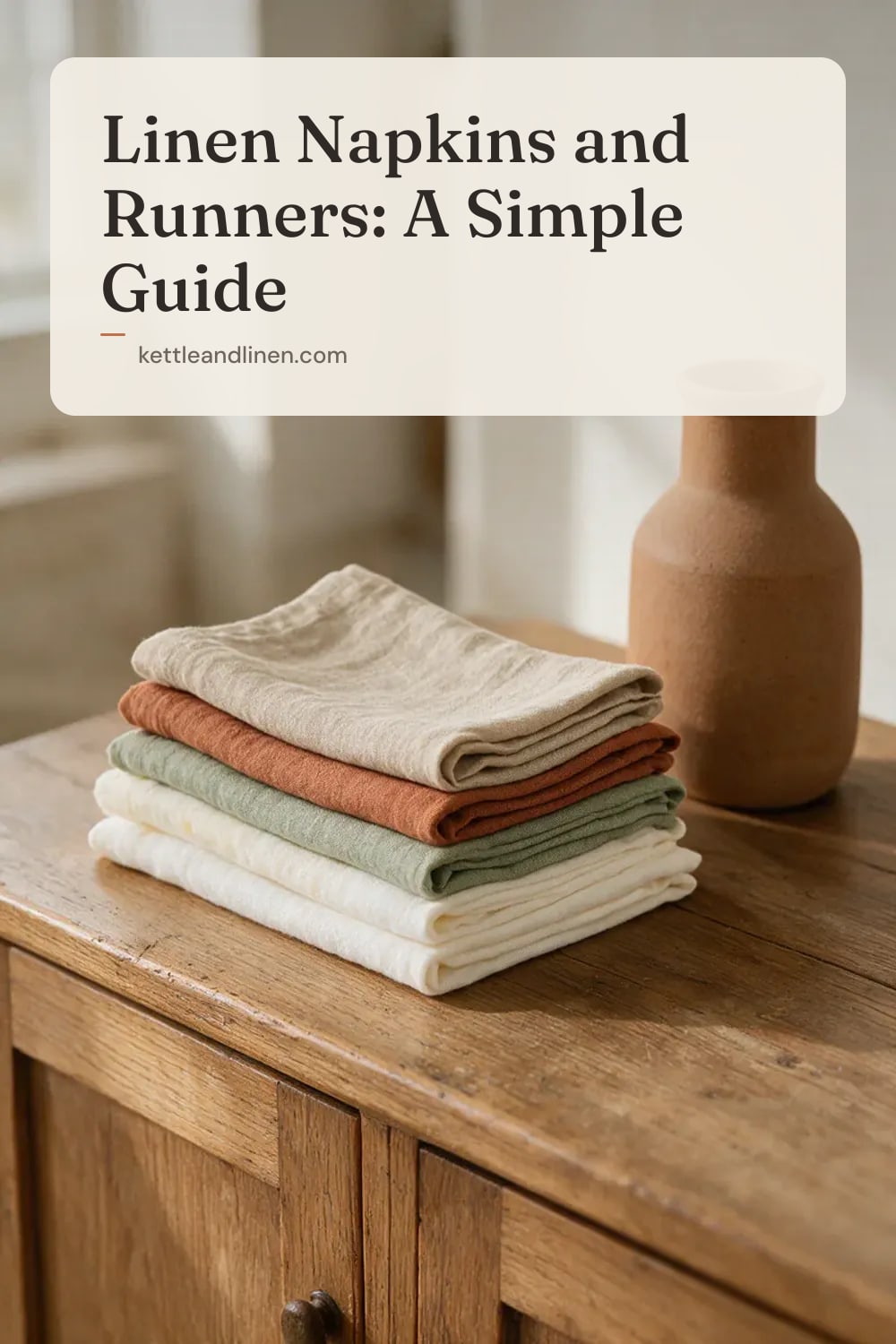
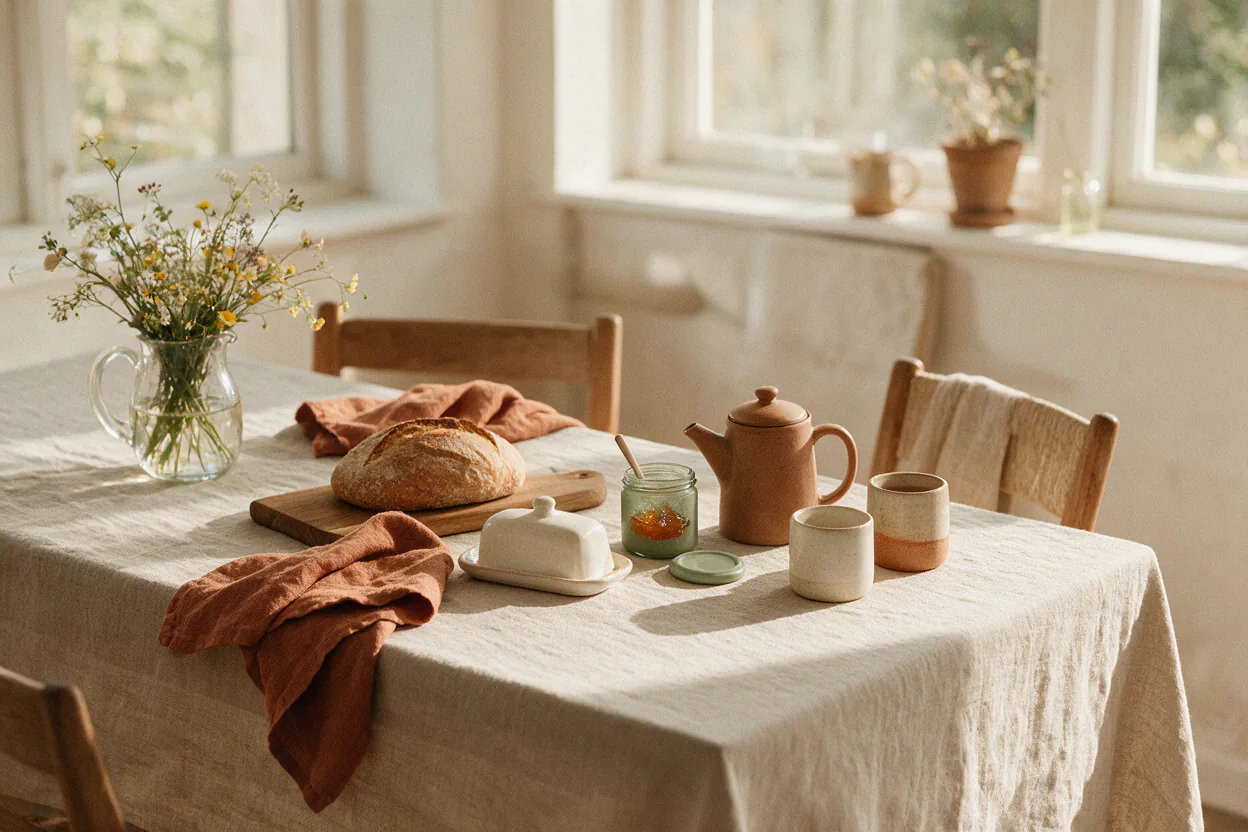
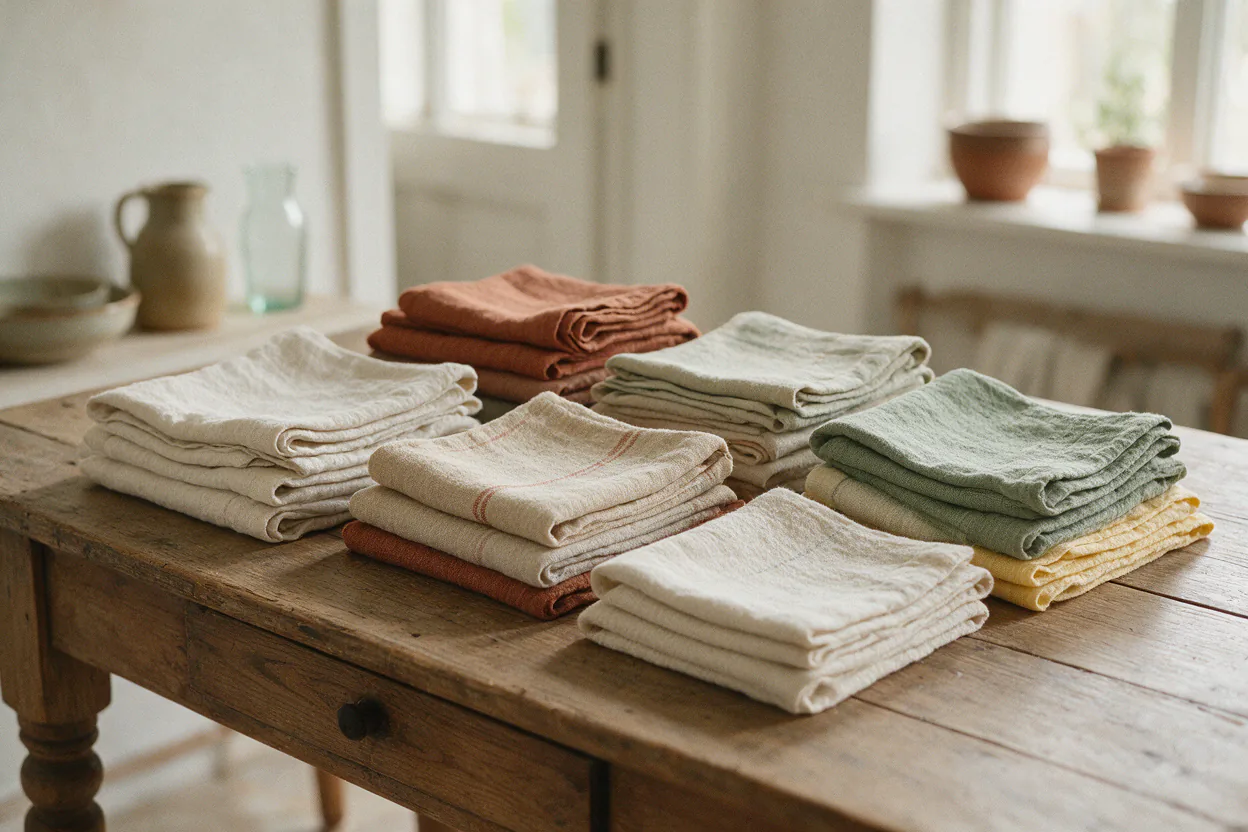
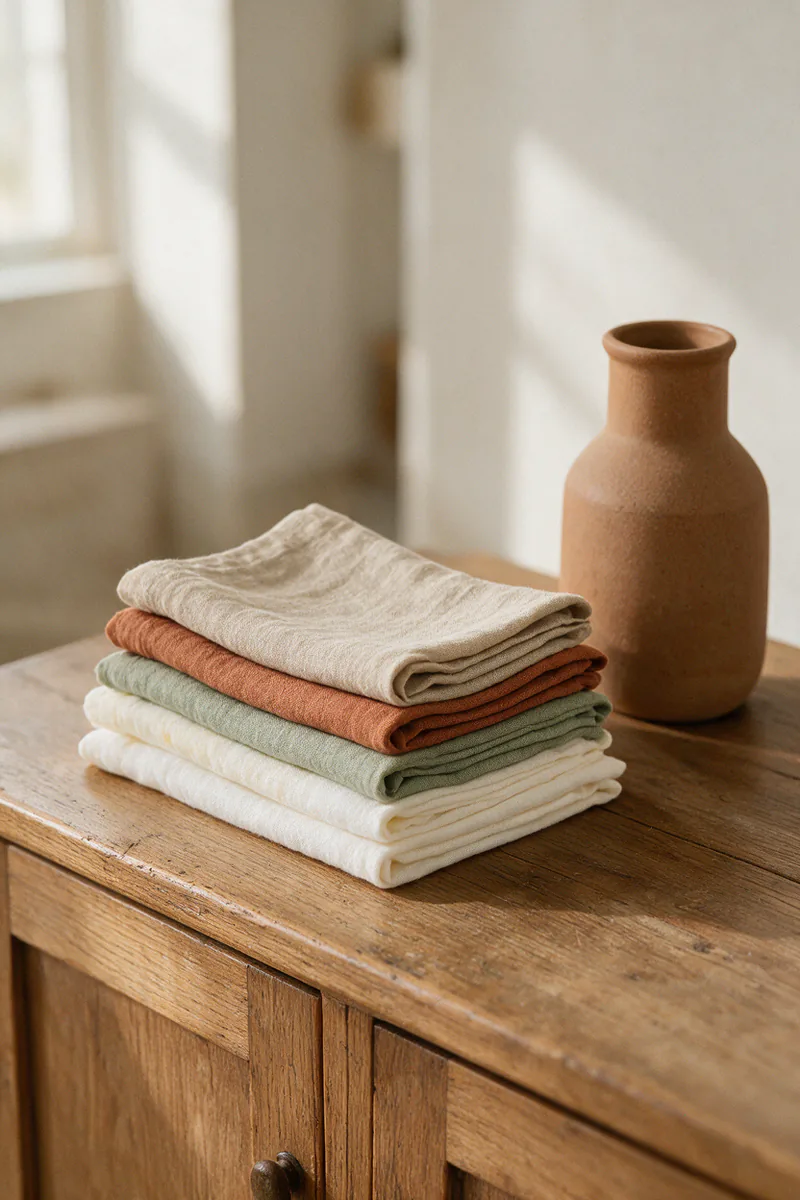
Dinner napkins are usually 18 to 22 inches square, which is large enough to cover a lap. Smaller napkins, around 12 to 16 inches, are fine for breakfast, lunch, and drinks. Linen napkins in a few complementary colors let you mix and match across the year.
6Pick the right fabric
Linen is durable, absorbent, and gets softer over time. It wrinkles naturally, which many people love for a relaxed look. Cotton is smoother and often less expensive. Linen and cotton blends sit in between. For everyday use, choose washed linen, which feels soft from the start.
7Care for it simply
Wash table linen in warm water with a gentle detergent and treat stains as soon as possible. Skip fabric softener, because it reduces absorbency. Dry on low heat or hang it to dry, and take it off while still slightly damp. If you like a crisper look, iron linen while it is damp.
A simple starter set
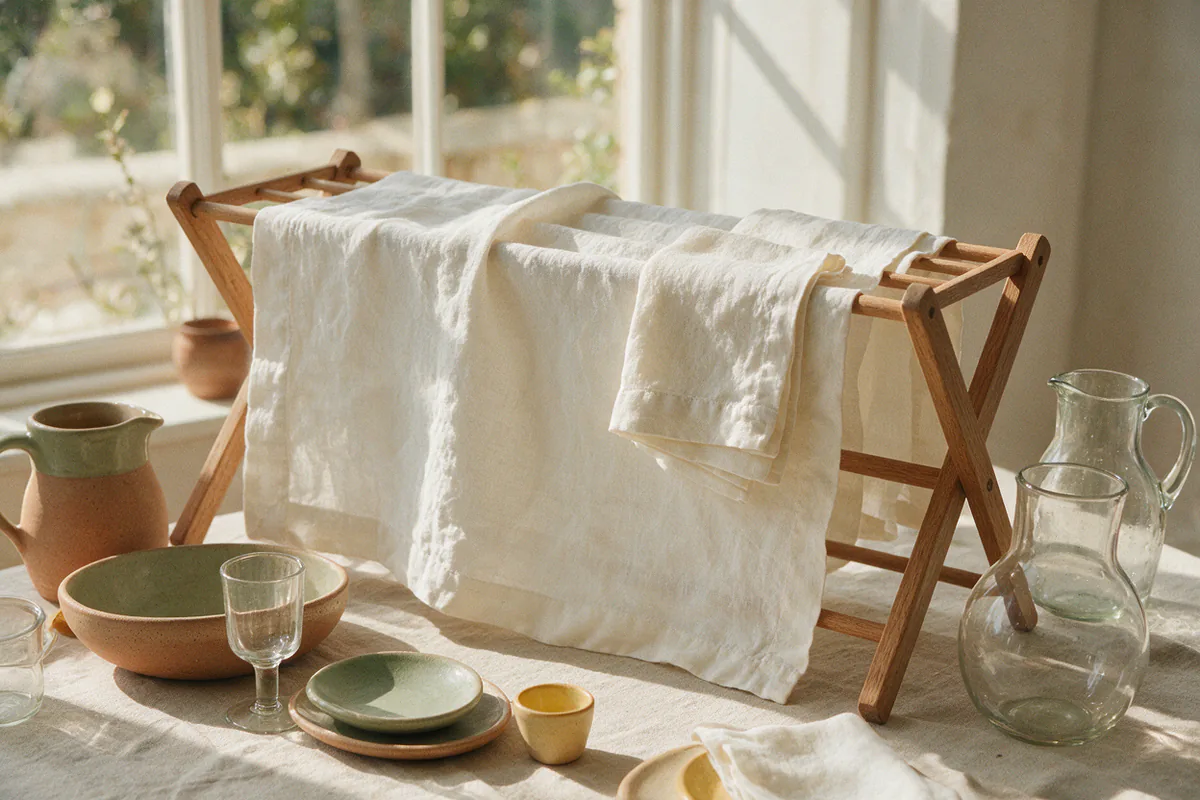
If you are starting from nothing, begin with one tablecloth in a natural color sized for your table, eight napkins in two colors, and one runner for days when you want to see the wood. That small set covers everyday meals, weekend breakfasts, and dinner with friends.
How to start
Measure your table today and calculate the tablecloth size with an 8 inch drop. Count how many people usually eat with you and add two for napkins. With those two numbers, you can choose table linen confidently and avoid the most common sizing mistakes.
Save it for later
Pin one of these to come back to the ideas when you need them.