A Tidy Pantry WithoutBuying Everything New
Some links on this page may be affiliate links. If you buy through one, we may earn a small commission at no extra cost to you. Images are AI-generated illustrations of ideas, not photos of the products.
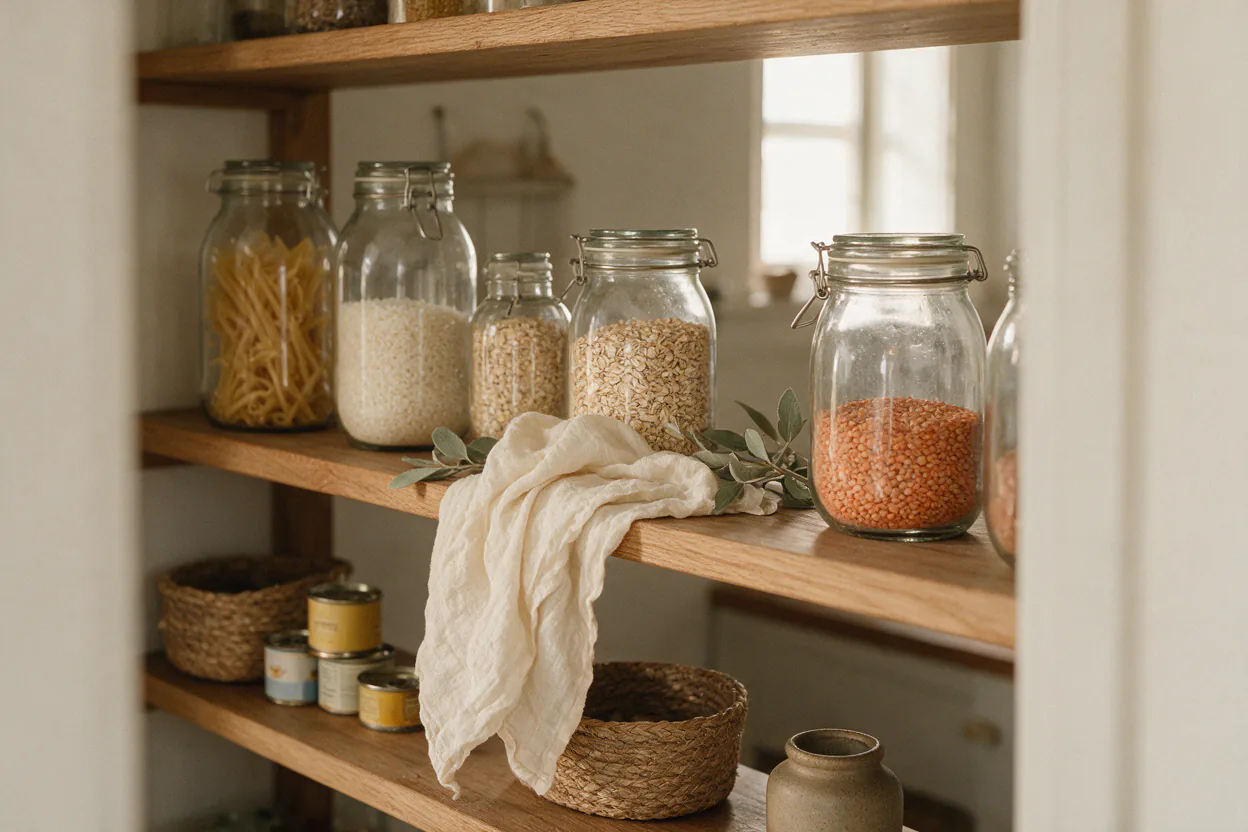
Photos of perfect pantries usually show rows of brand-new matching containers. They look lovely, but you do not need them to have a pantry that works. Most of the change comes from sorting and placing things well. Here are eight steps that use what you already have.
1Take everything out
Empty the whole pantry, or one shelf at a time if that feels like too much. Wipe the shelves while they are bare. You will find expired food, duplicates, and things you forgot you owned. Throw out what is spoiled and set aside what you will not eat for donation.
2Sort into groups
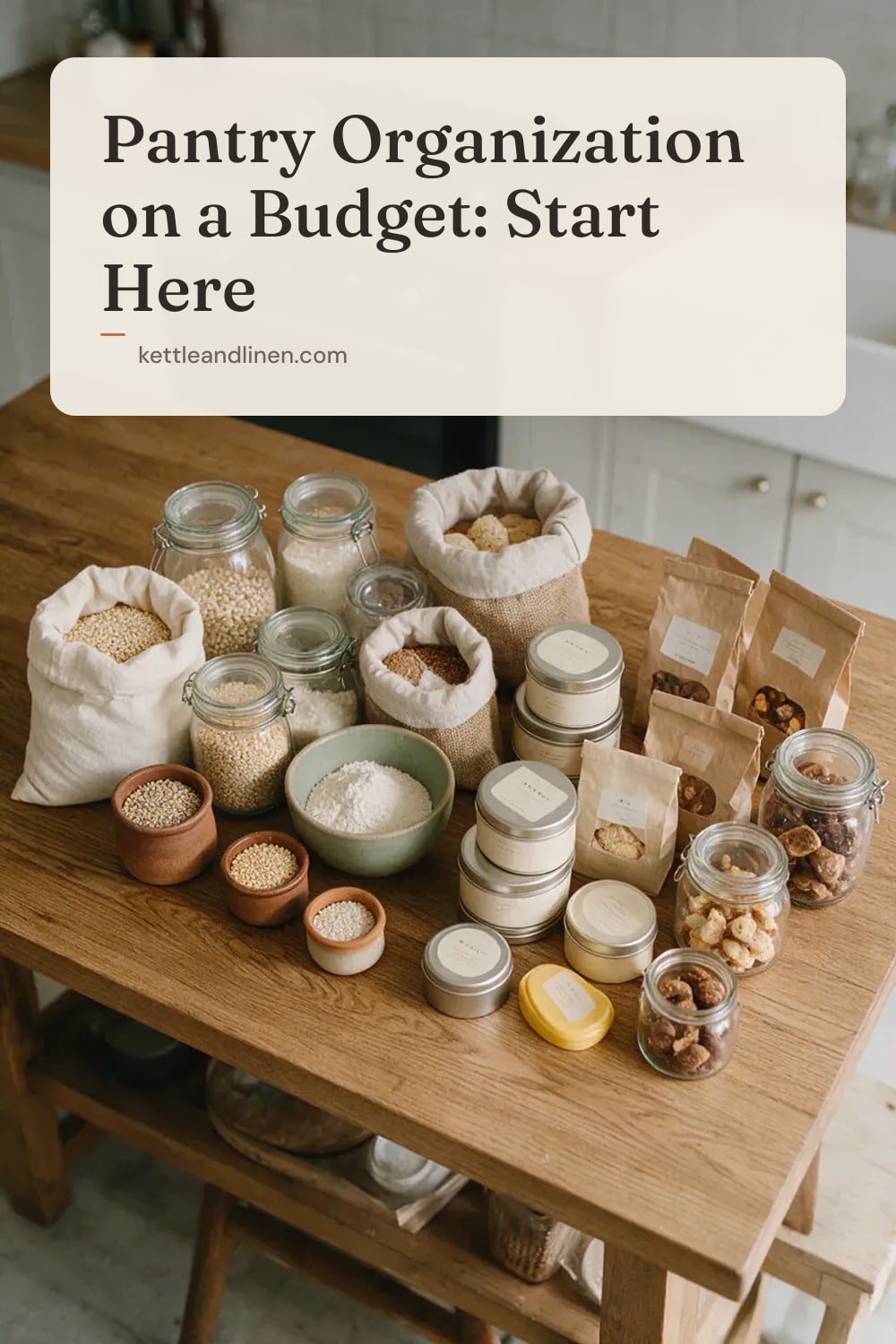
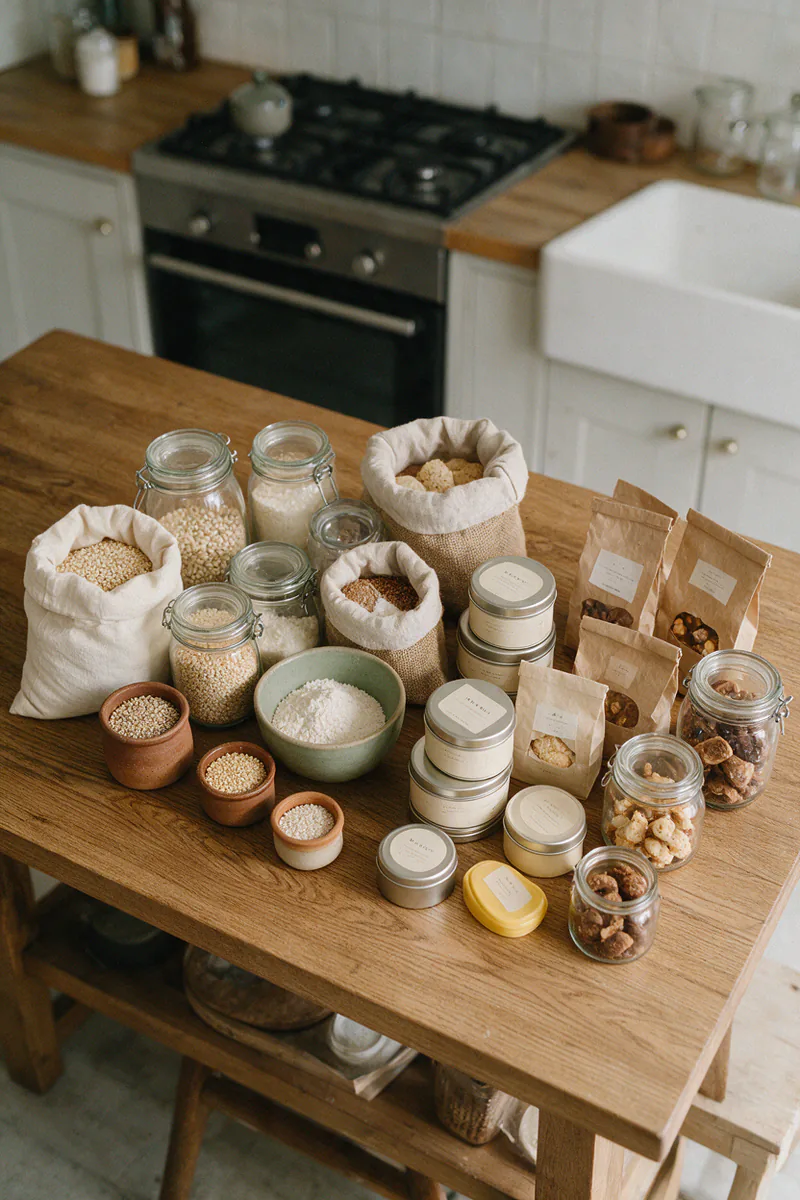
Before anything goes back, group it on the table: grains and pasta, baking, tins and jars, snacks, breakfast, and spices. Seeing everything together shows you how much space each group needs. This step does more for a tidy pantry than any container.
3Put daily things at eye level
Give the easiest shelf to what you use every day, such as oats, coffee, bread, and snacks. Heavy items like flour and tins go low. Things you use a few times a year, like holiday baking supplies, go on the top shelf. You will spend less time searching every morning.
4Reuse jars before you buy containers
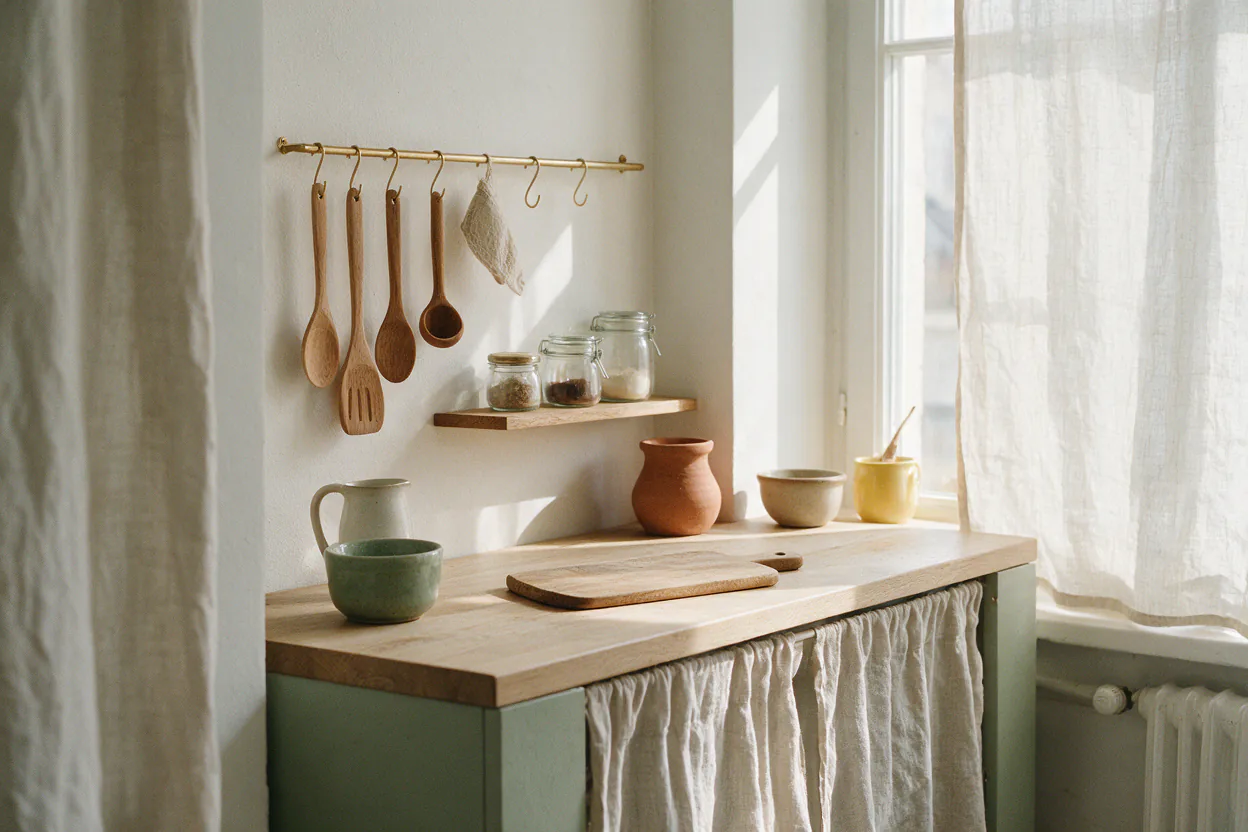
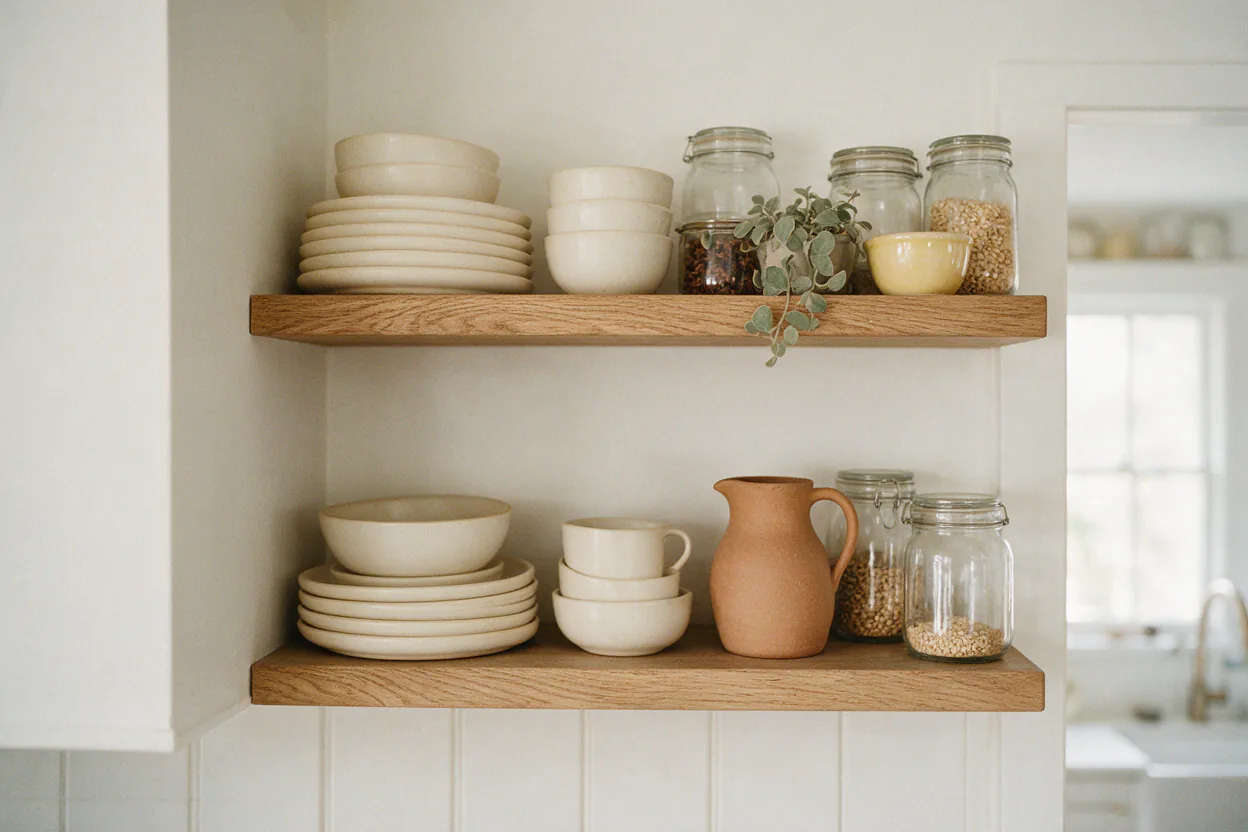
Glass jars from sauces, jam, and pickles make good storage once they are washed and the labels soaked off. Use them for lentils, rice, nuts, and seeds. Different sizes are fine. Grouping similar shapes on one shelf keeps it looking calm even if the jars do not match.
5Label simply
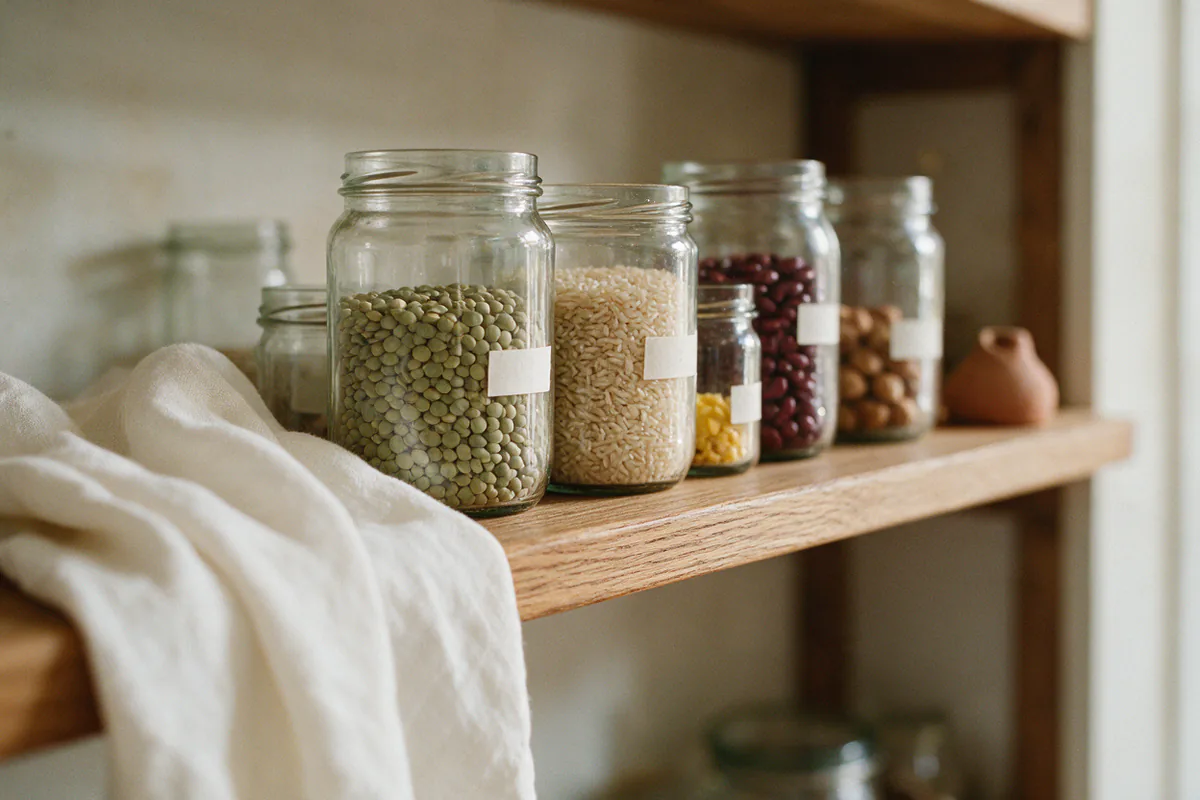
A small paper label with a pen is enough. Write what is inside and, for things like flour or nuts, the month you opened it. Labels help everyone in the house put things back in the right place, not only the person who organized it.
6Use baskets for loose things
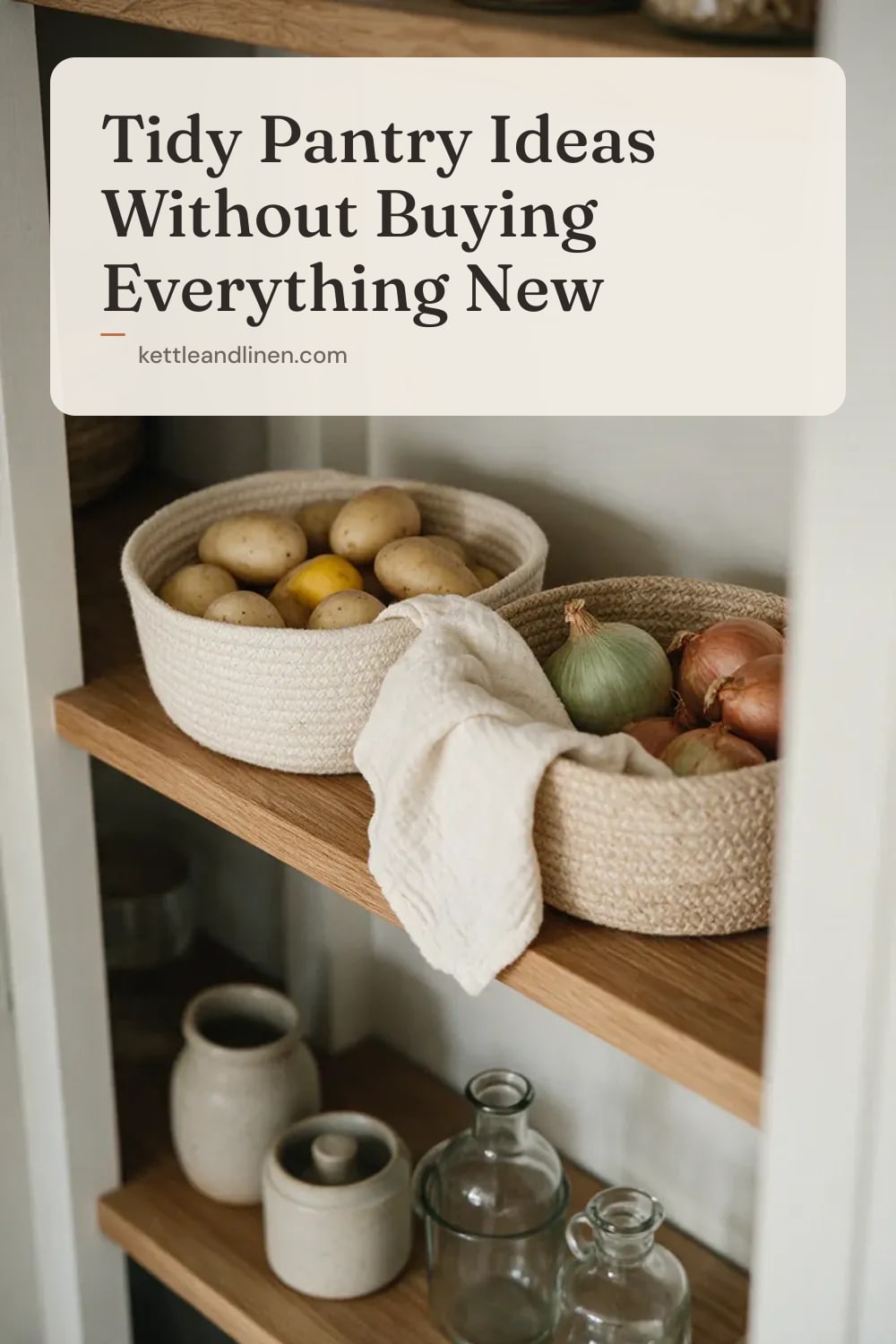
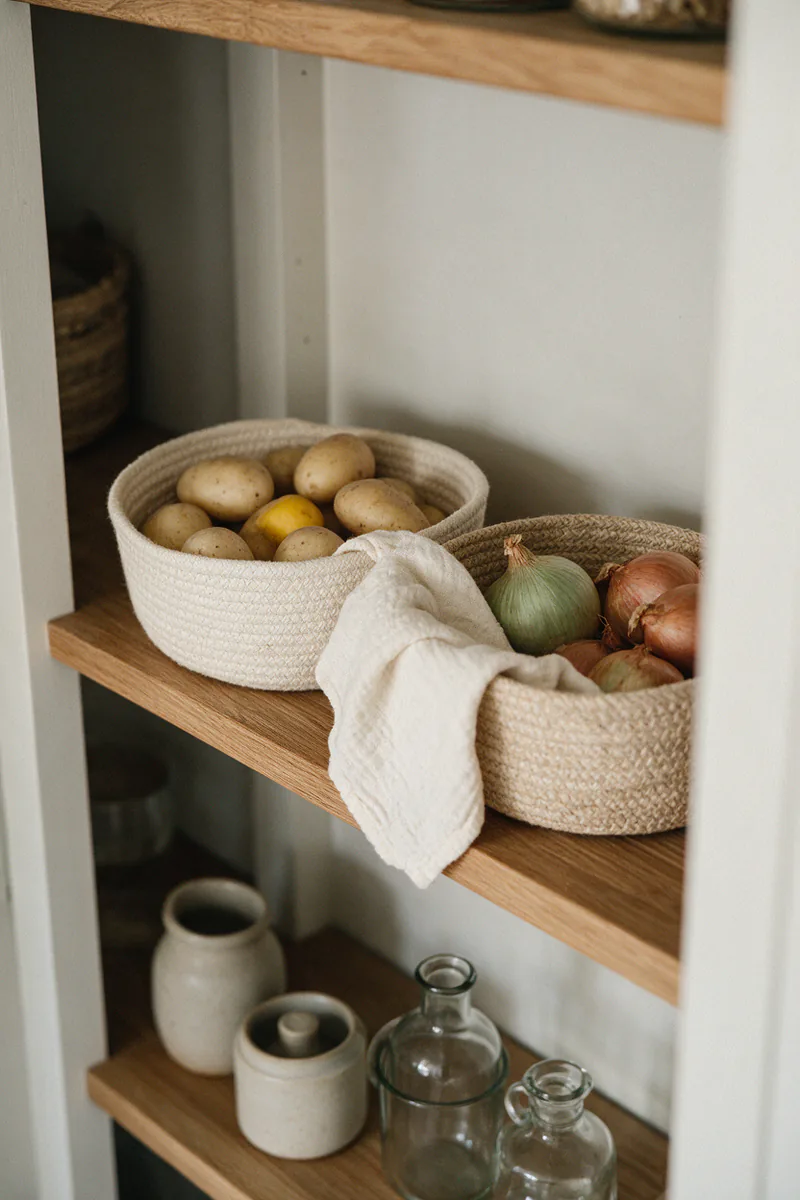
Potatoes, onions, snack bags, and small packets slide around and get lost. A few baskets you already own, or simple cardboard boxes, keep them in one place. Choose baskets with open weave for produce so air can move around it.
7Make a breakfast shelf
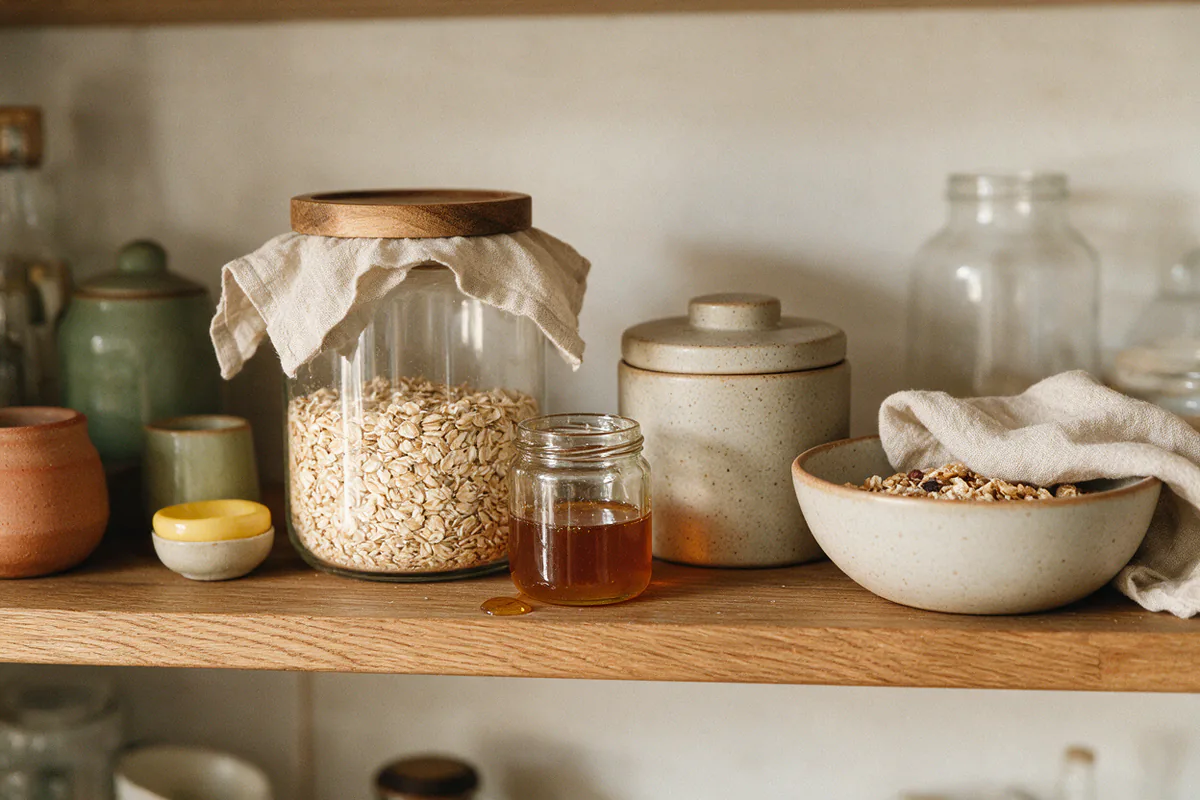
Group everything for breakfast in one spot: oats, cereal, honey, coffee, and tea. Mornings get faster when you do not have to open three cabinets. The same idea works for a baking shelf or a lunchbox shelf.
8Keep one empty space
Leave a small gap on one shelf for new shopping. When the pantry is packed to the edges, new things get pushed on top and the system breaks down within a week. A little space keeps it working.
When to buy containers
If you do want new containers, buy them last, after you have lived with the new layout for a few weeks. By then you will know exactly which foods need them and what size fits your shelves. Start with clear, stackable ones for the foods you buy most often.
How to start
Pick one shelf tonight. Take everything off, sort it on the counter, and put back only what belongs. Use a jar or two from the recycling. One finished shelf will show you how the rest of the pantry can look.
Save it for later
Pin one of these to come back to the ideas when you need them.