How to Choose and Carefor Wooden Kitchen Tools
Some links on this page may be affiliate links. If you buy through one, we may earn a small commission at no extra cost to you. Images are AI-generated illustrations of ideas, not photos of the products.
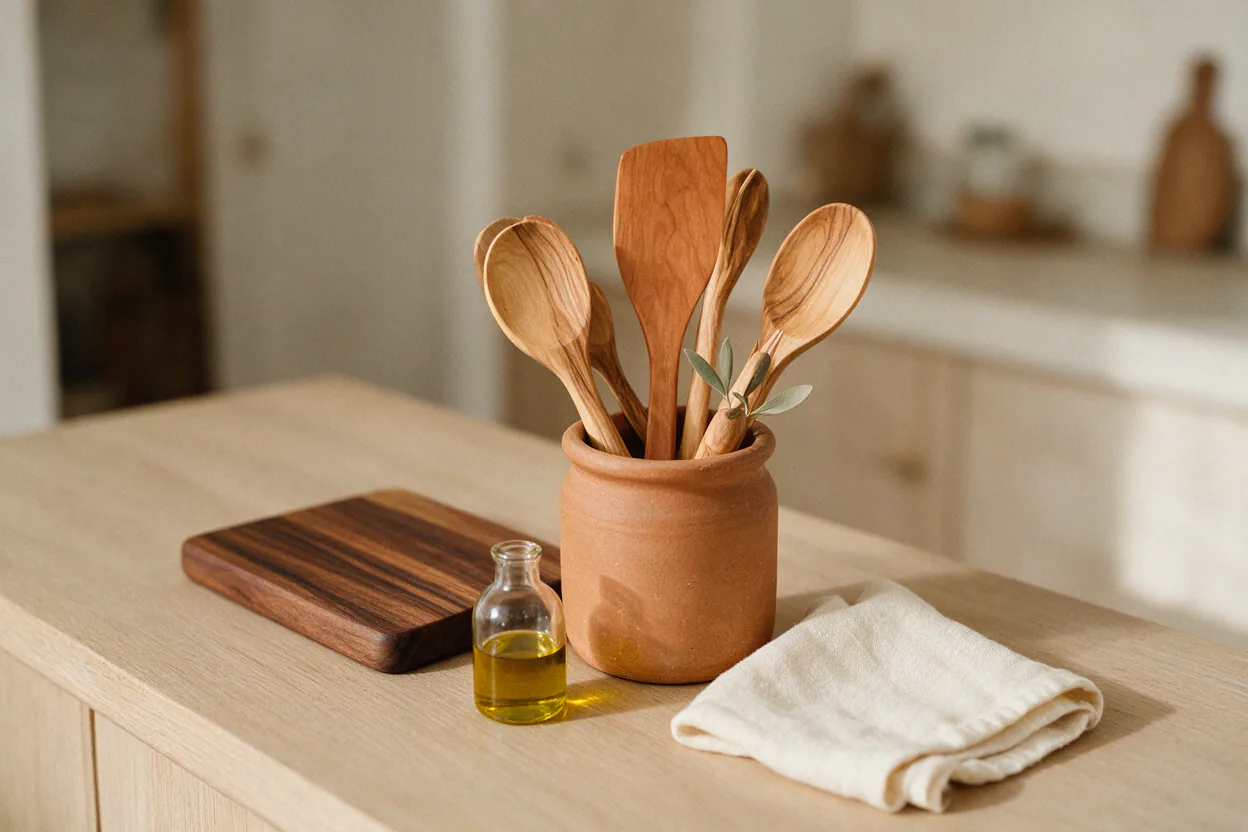
Wooden tools are some of the most pleasant things to cook with. They are gentle on pans, quiet against a pot, and they get more beautiful with use. They also need a little care that metal and silicone do not. Here is how to choose good ones and keep them for years.
1Choose dense hardwoods
The best wooden tools are made from dense, close-grained hardwoods such as maple, cherry, walnut, beech, and olive wood. They resist cracking and do not soak up as much liquid. Very soft or open-grained woods tend to stain and split faster.
2Start with a few useful shapes
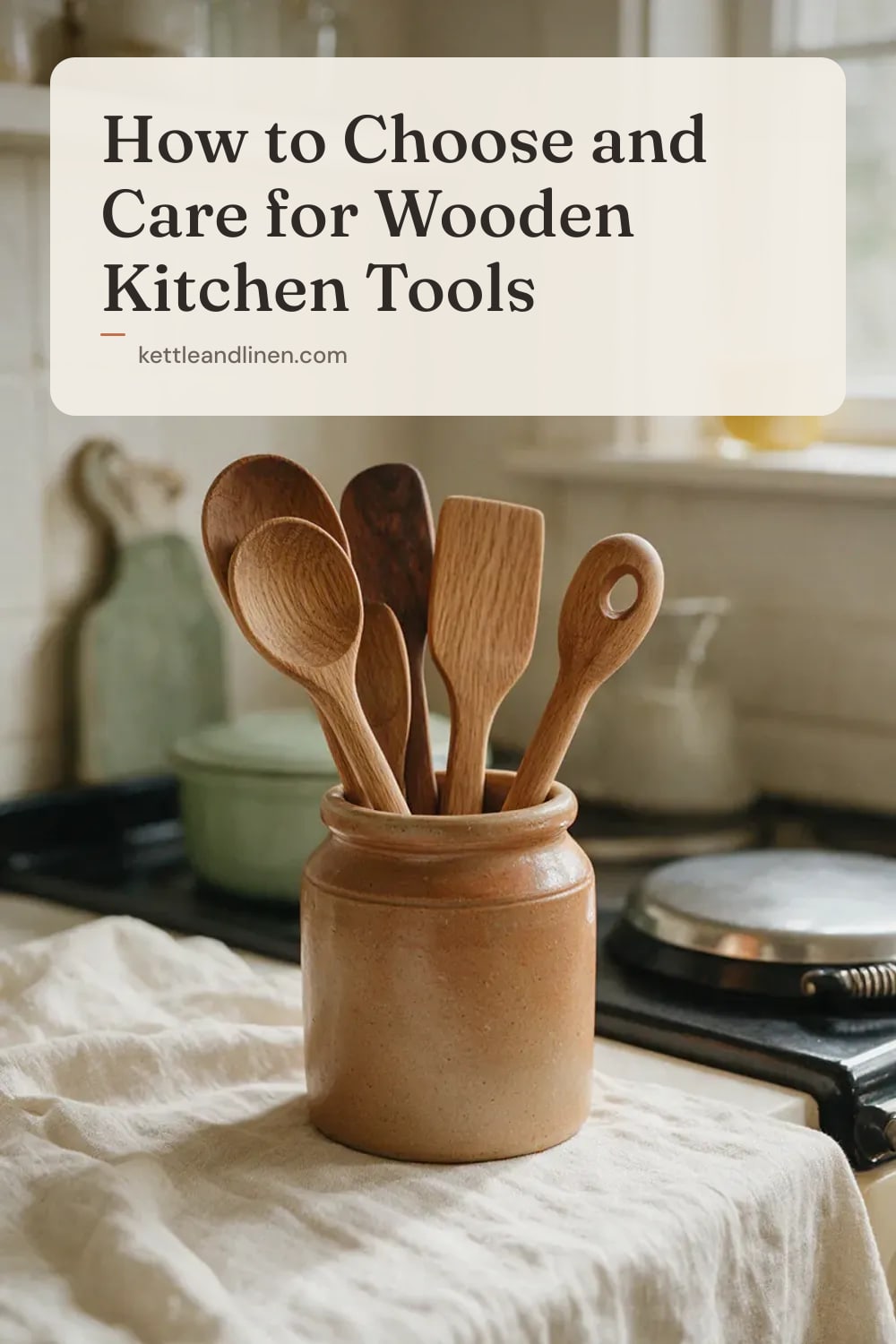
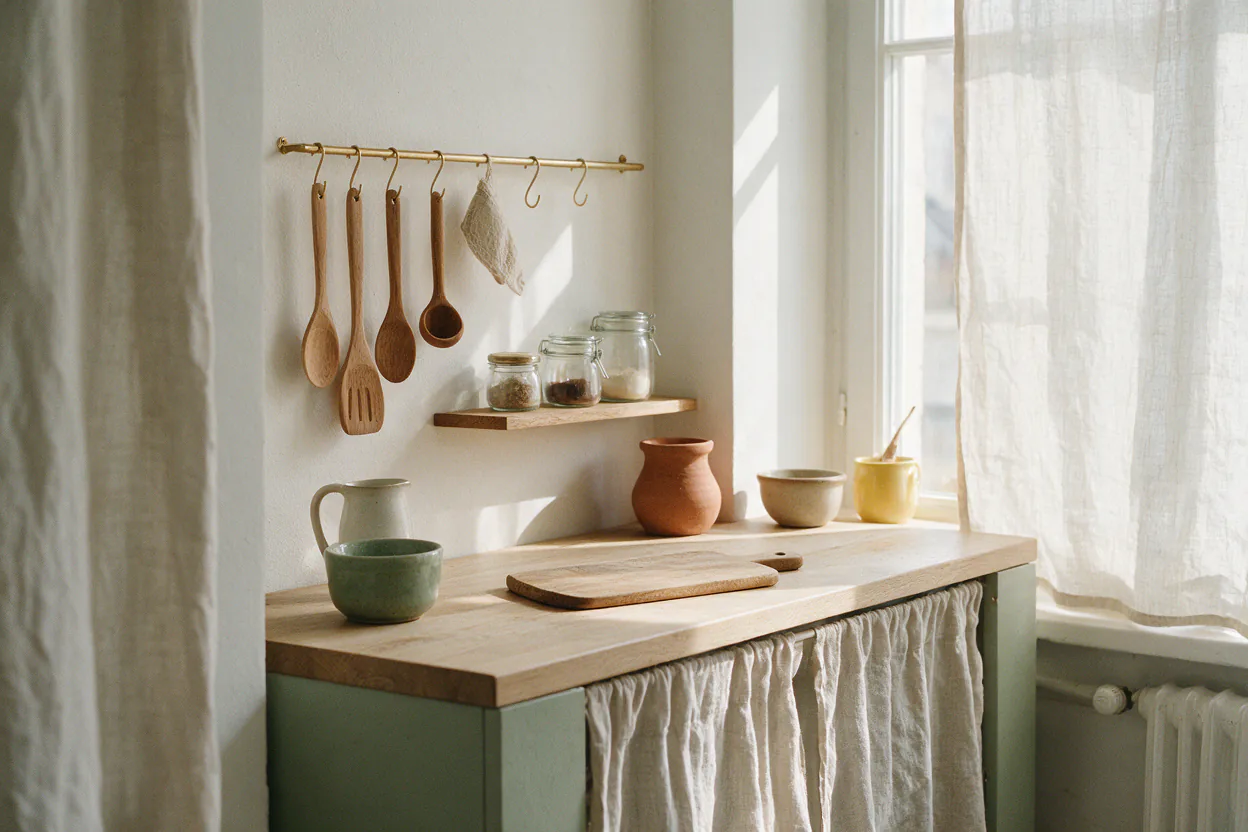
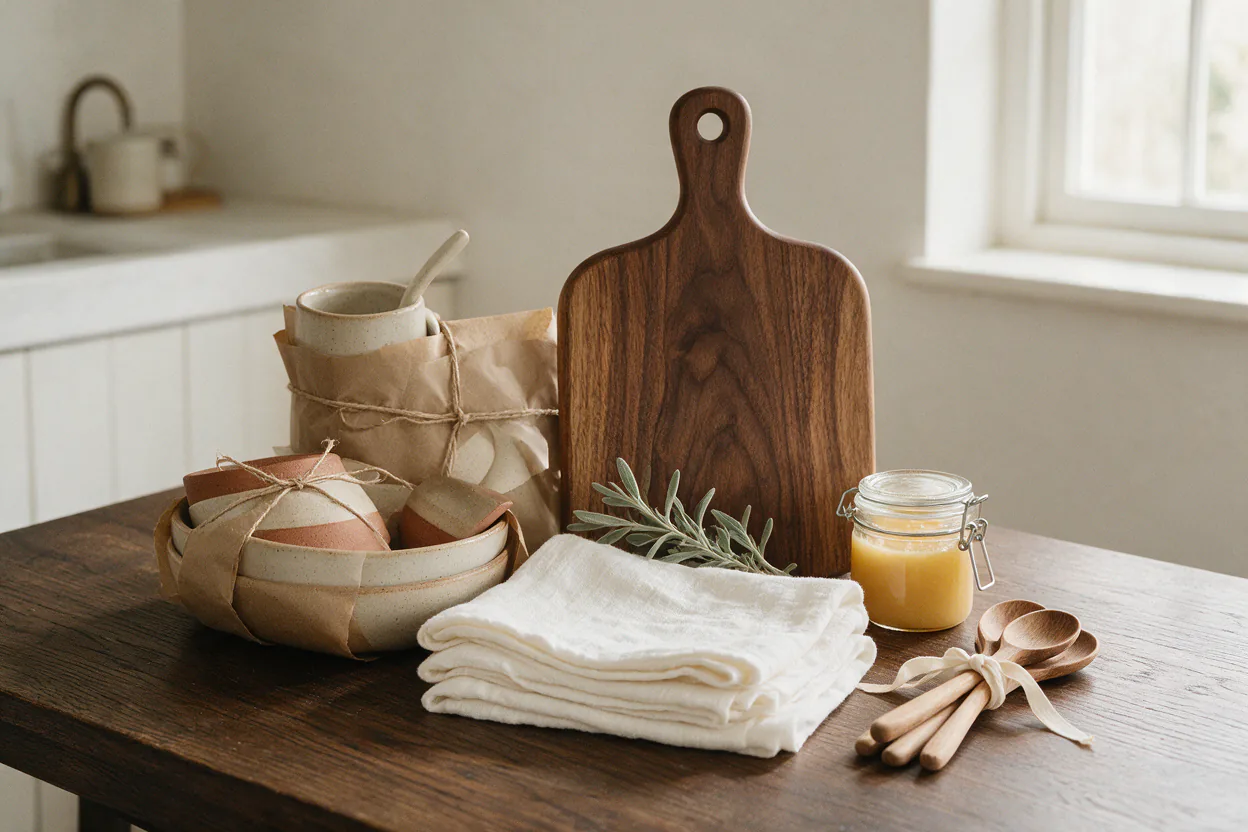
You do not need a big set. A round spoon for stirring, a flat-edged spatula for scraping the bottom of a pan, and a long-handled spoon for deep pots cover most cooking. A wooden cutting board and a small serving board complete the set. Keep them upright in a crock near the stove.
3Wash by hand, quickly
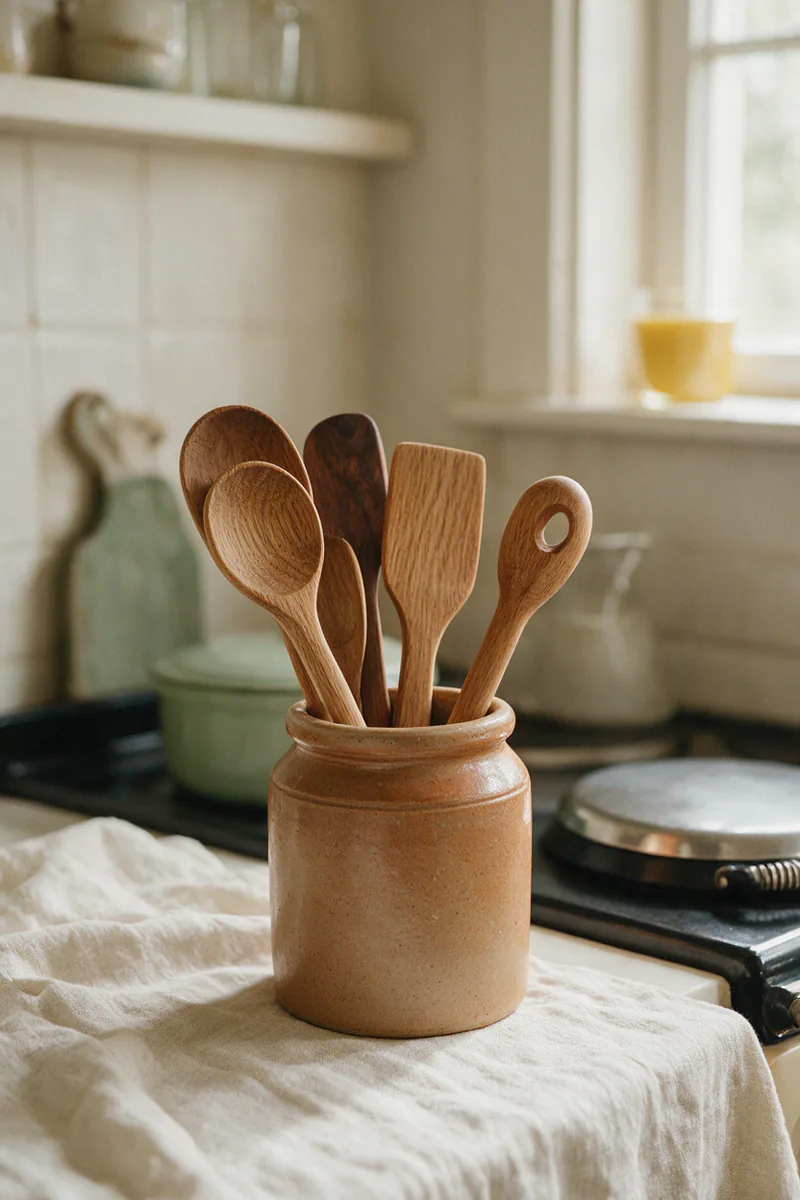
Wash wooden tools in warm, soapy water and rinse them right away. Do not leave them soaking in the sink. Never put them in the dishwasher, because the heat and long wet cycle make wood swell, crack, and feel rough.
4Dry them standing up
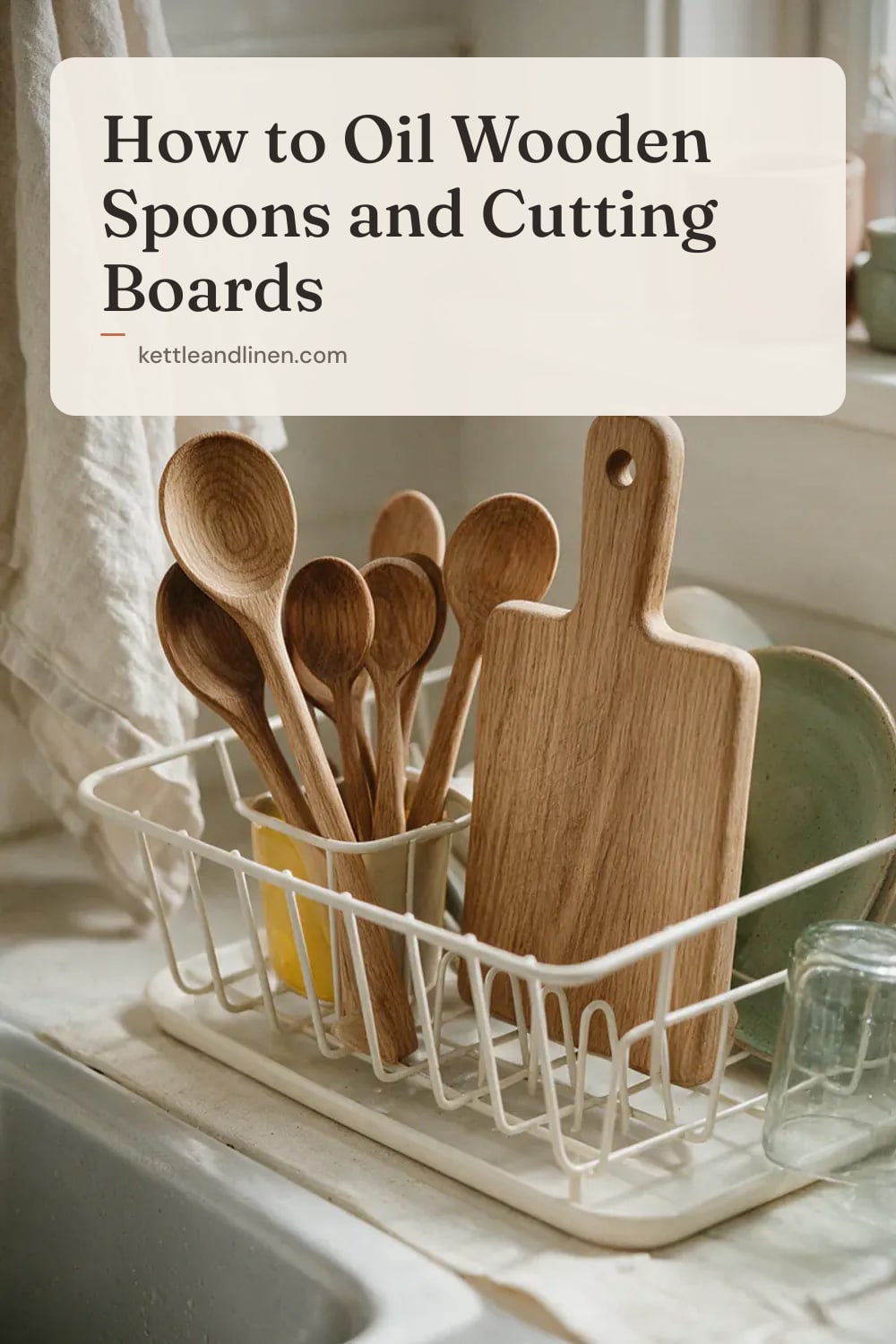
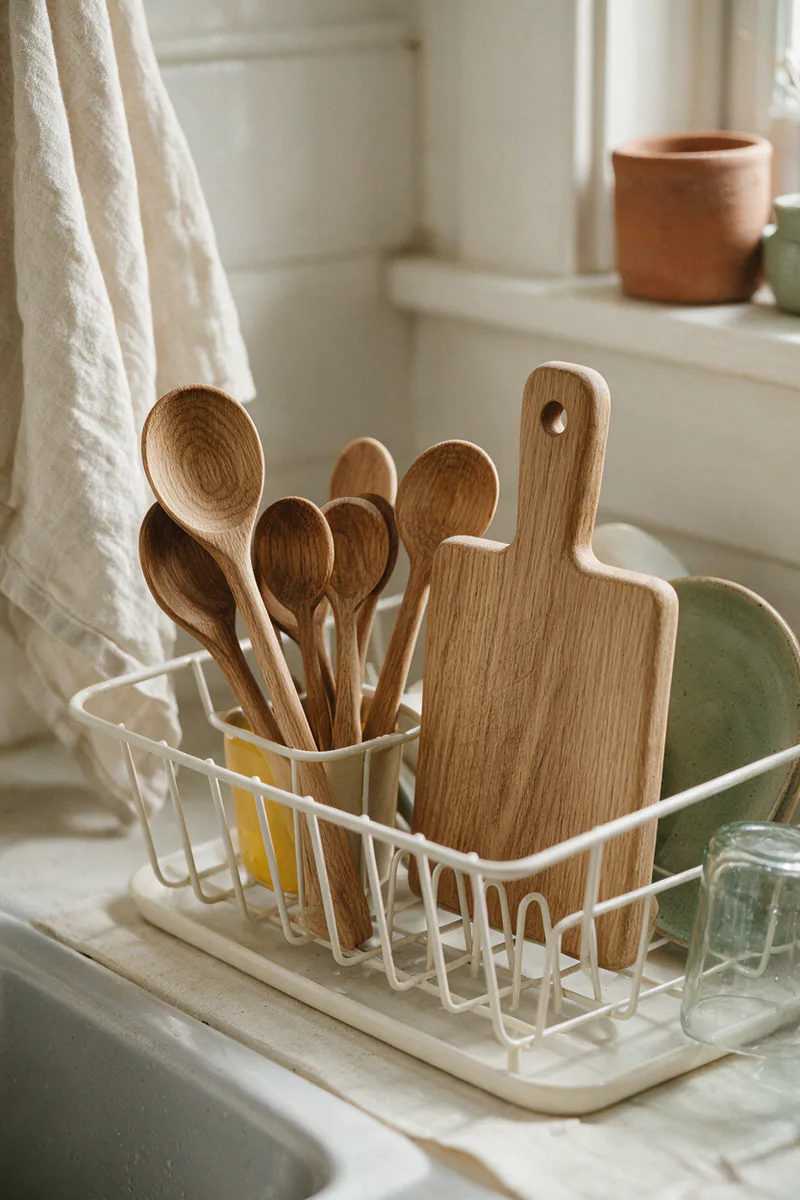
After washing, wipe off the water and let tools dry standing upright or on their side with air around them. Lying flat on a wet counter, wood dries unevenly and can warp. A cutting board dries best on its edge.
5Oil once a month
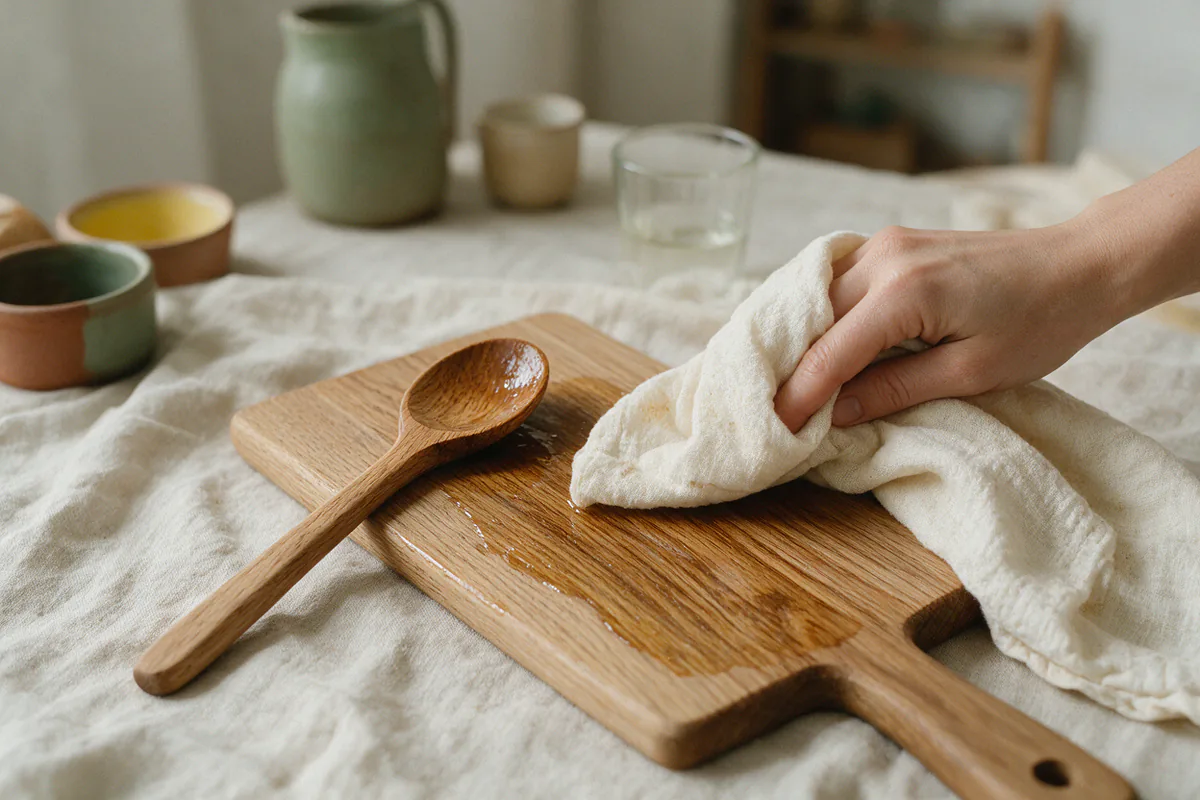
When wood looks pale or feels dry, it is time to oil it. Use a food-safe mineral oil or a board butter made with beeswax. Rub a thin layer on with a clean cloth, leave it overnight, and wipe off the extra in the morning. New tools may need oil every week for the first month.
6Fix rough spots with sandpaper
If the grain rises and a spoon feels fuzzy, a light sanding with fine sandpaper makes it smooth again. Oil it afterward. The same trick removes small stains and burn marks from cutting boards.
7Pick a board for the job
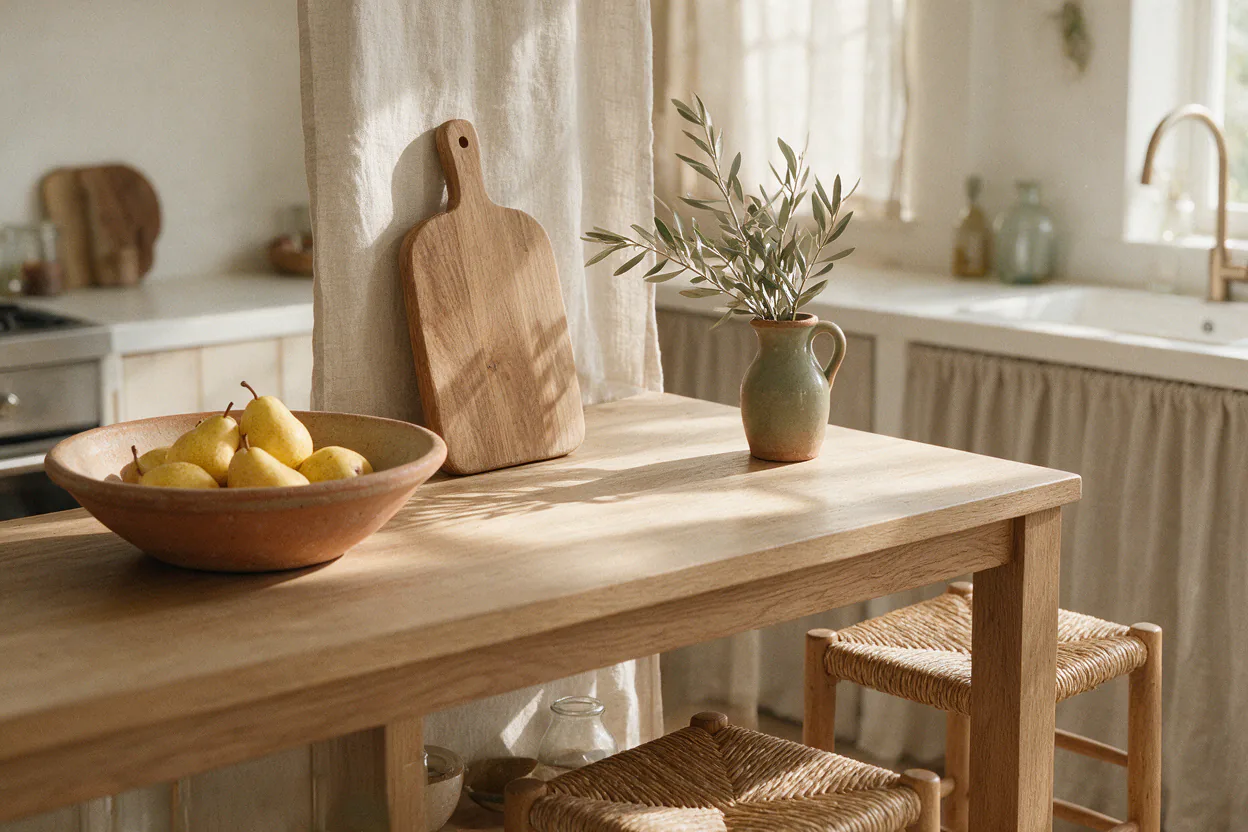
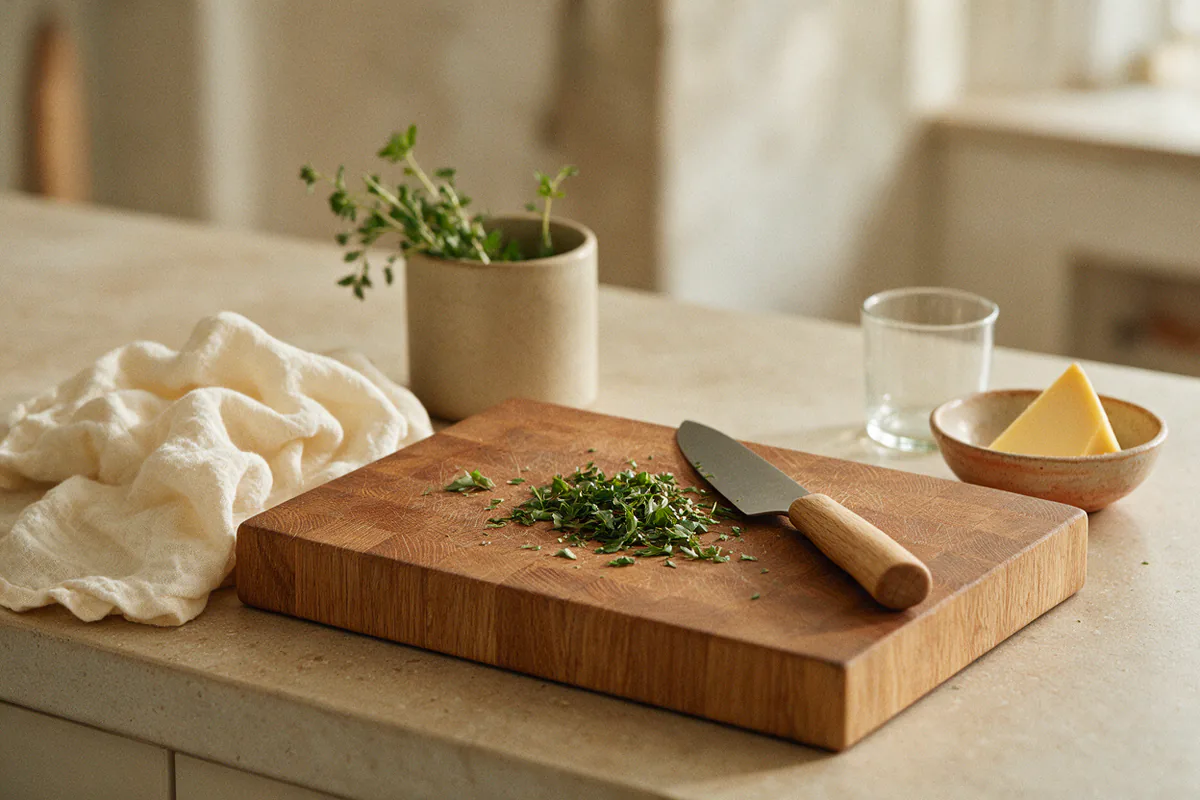
For a main chopping board, choose a thick board large enough to hold a pile of chopped vegetables. End-grain boards, made from short blocks of wood, are especially kind to knives. Keep a separate board for raw meat, or use a plastic board for that job that can go in the dishwasher.
Signs it is time to replace
Well-cared-for wood lasts a long time, but not forever. Replace a tool when it has deep cracks that hold food, a split that keeps growing, or a smell that does not go away after washing and drying. A worn but smooth spoon is fine. It has simply been loved.
How to start
Gather all your wooden tools tonight. Wash them, let them dry upright, and give them a thin coat of oil before bed. In the morning, wipe off the extra. Most will look almost new, and you will know which ones are worth keeping.
Save it for later
Pin one of these to come back to the ideas when you need them.