How to Care for a Cast IronSkillet So It Lasts for Decades
Some links on this page may be affiliate links. If you buy through one, we may earn a small commission at no extra cost to you. Images are AI-generated illustrations of ideas, not photos of the products.
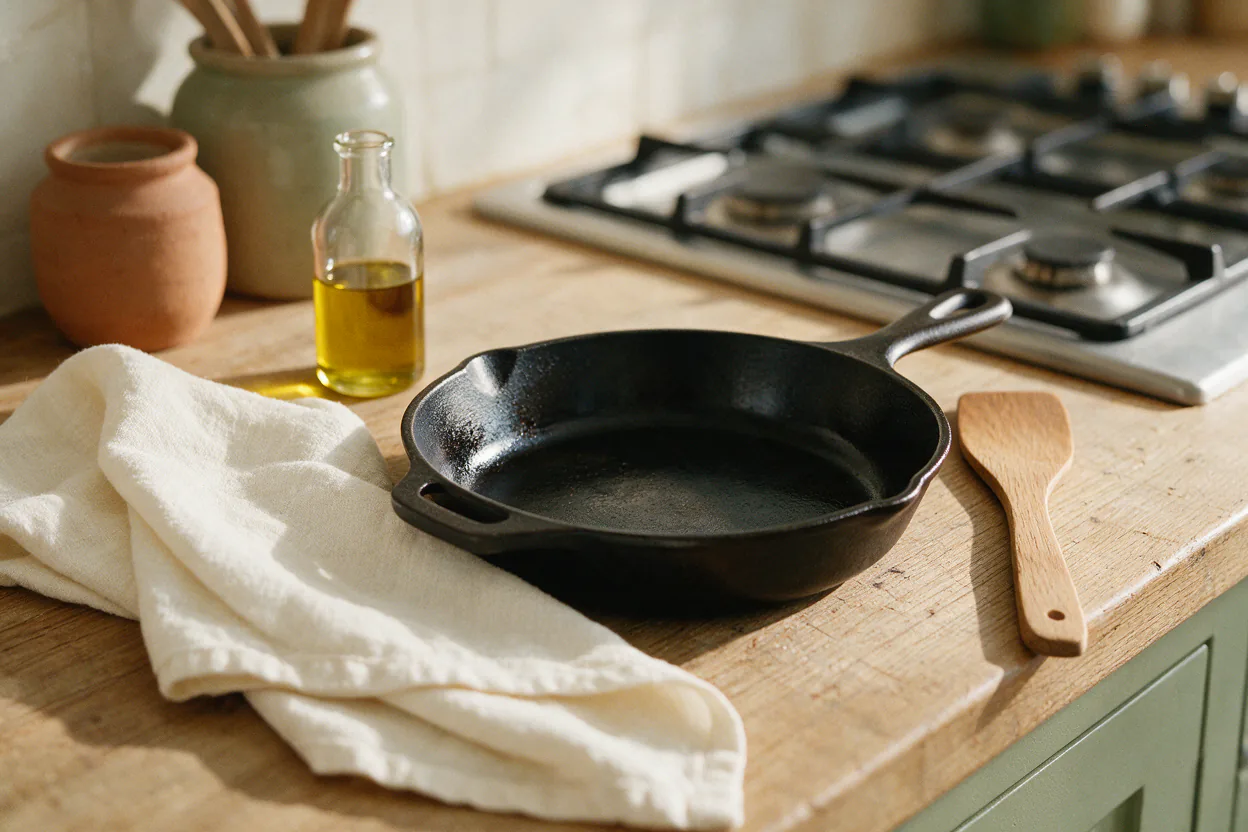
A cast iron skillet can outlive its owner. It sears, bakes and fries, goes from stove to oven, and gets better the more you use it. The care routine has a reputation for being fussy, but it comes down to a few habits that take two minutes after cooking.
1Understand seasoning
Seasoning is a thin layer of oil that has been heated until it bonds to the iron. It protects the pan from rust and makes it naturally slick. Every time you cook with a little fat, you add to it. That is why a skillet used often looks better than one kept for special occasions.
2Clean it while it is warm
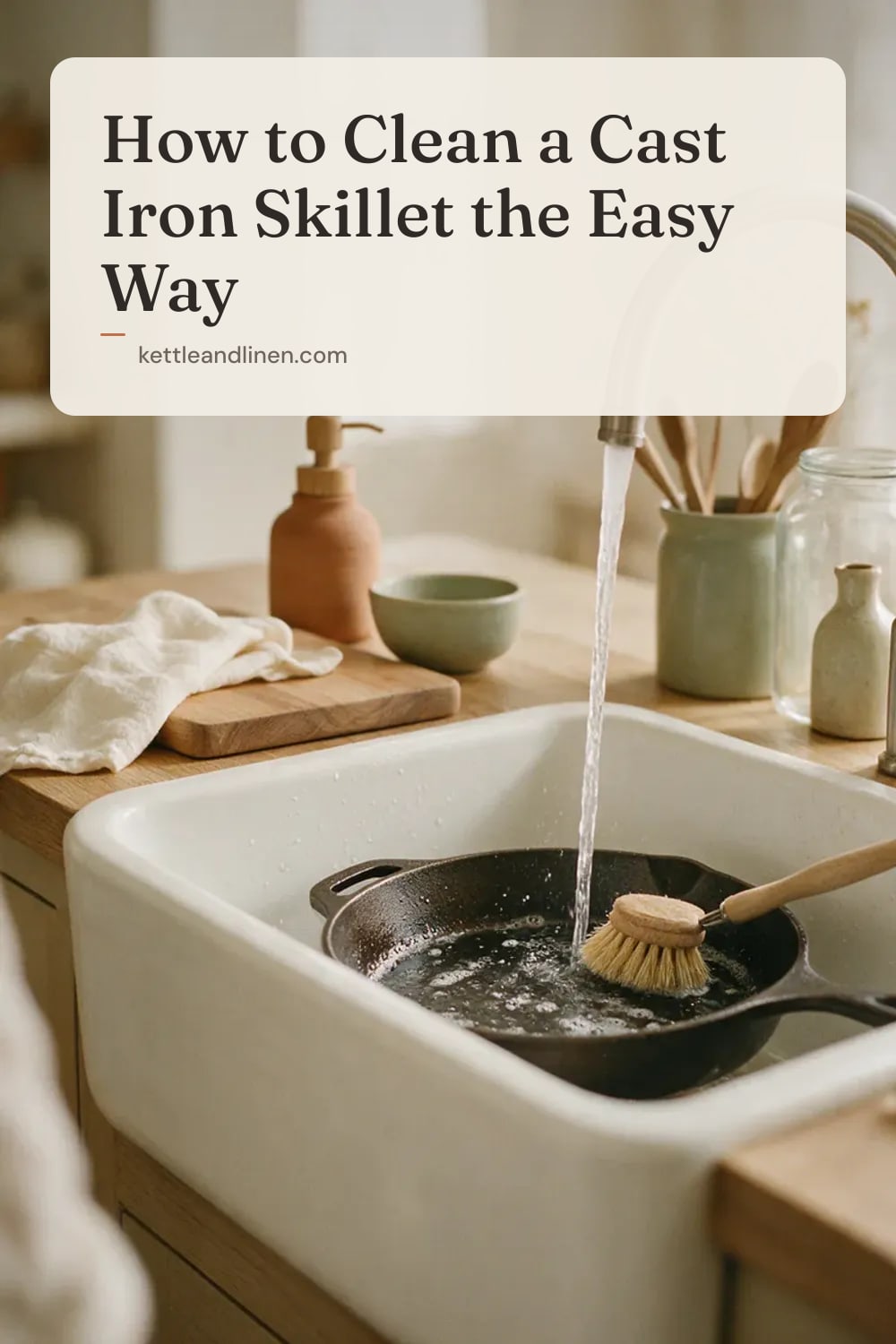
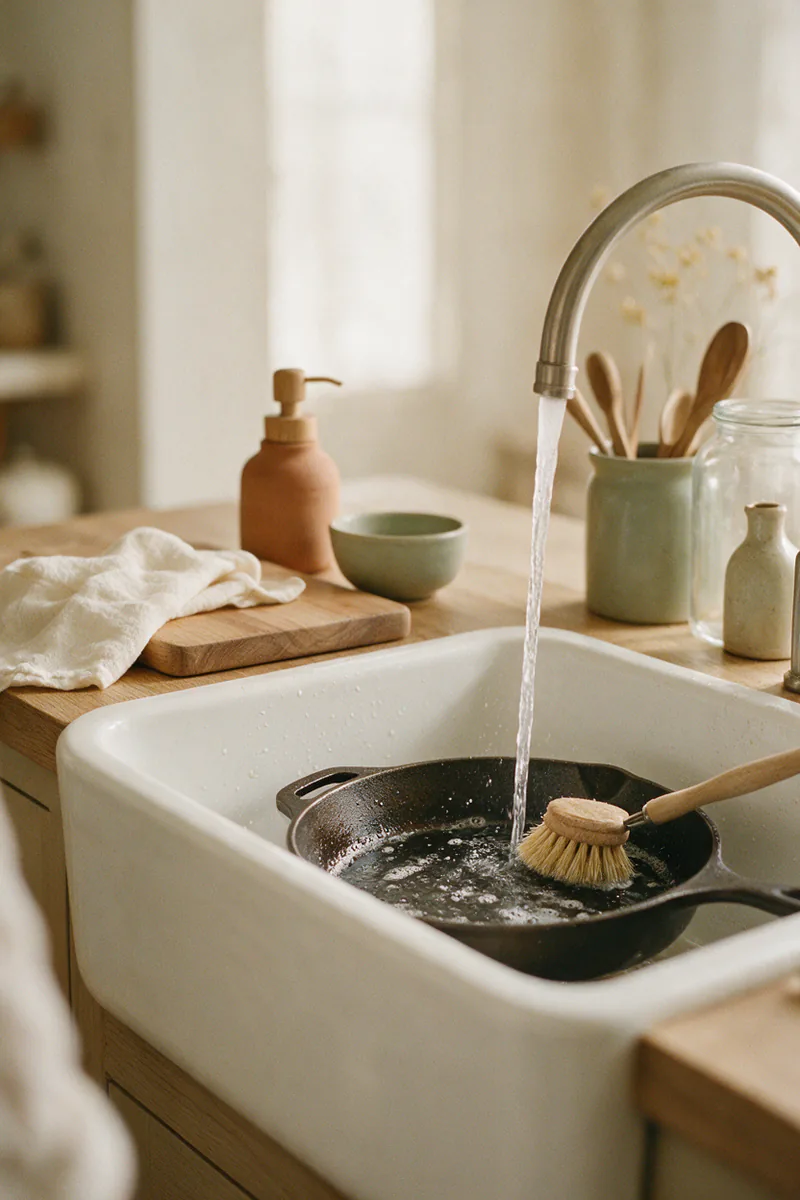
Let the pan cool enough to handle, then rinse it under hot water and scrub with a brush or a non-scratch sponge. A small drop of dish soap is fine, because modern soap will not strip well-bonded seasoning. For stuck-on bits, scrub with coarse salt and a little water, then rinse.
3Never let it soak
Water is the main enemy of cast iron. Do not leave a skillet in the sink overnight or put it in the dishwasher. Both can strip seasoning and cause rust within hours. If something is very stuck, simmer a little water in the pan for a few minutes, then scrape gently with a wooden spatula.
4Dry it completely
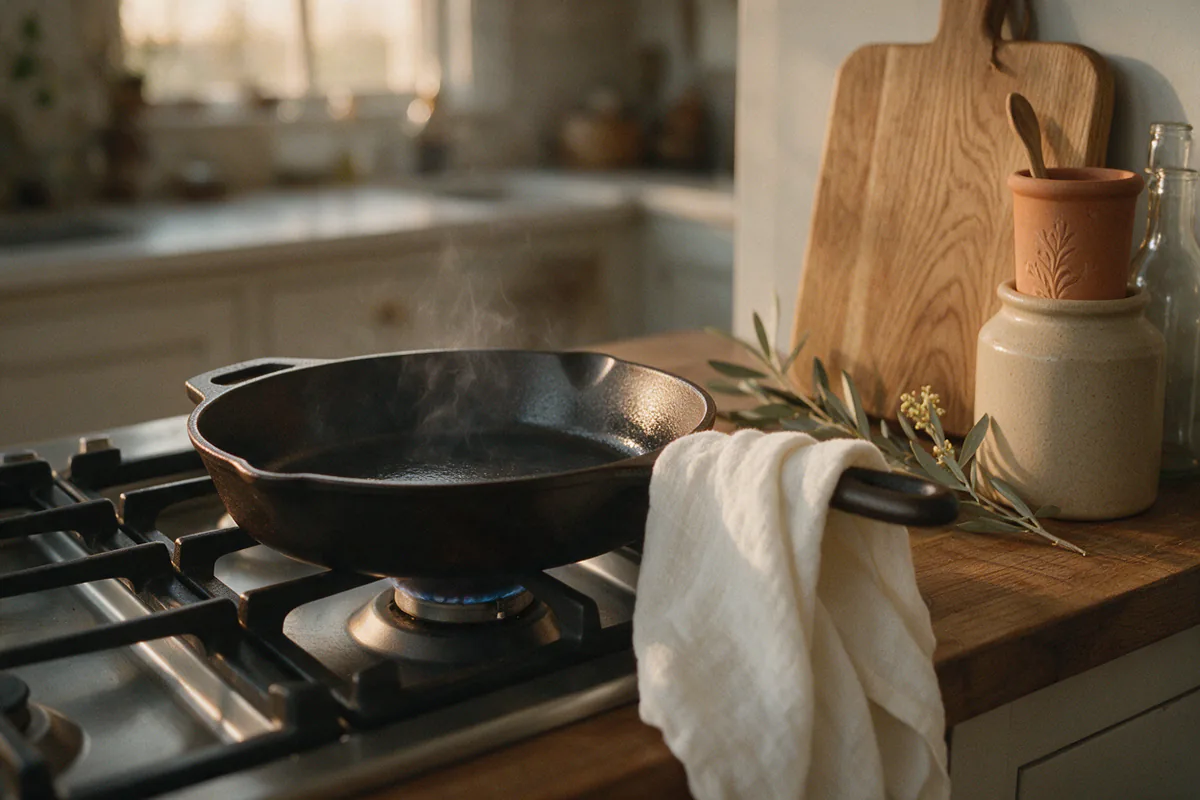
Towel the skillet dry, then set it over low heat for a minute or two until every trace of moisture is gone. Water hiding in the pores is what causes those orange rust spots. Drying on the stove is the single habit that makes the biggest difference.
5Wipe in a thin layer of oil
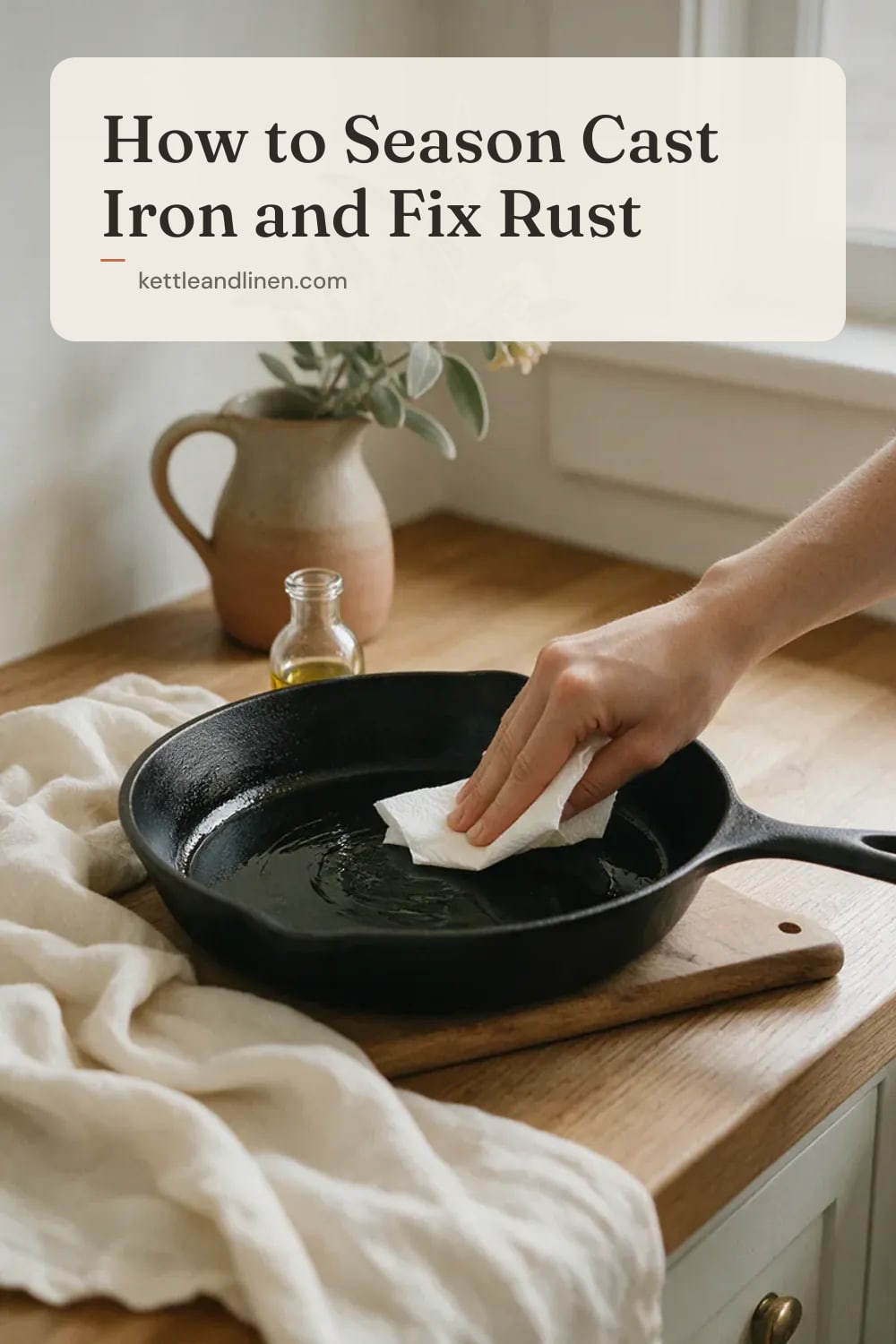
While the pan is still warm, add a few drops of neutral oil and rub it over the inside with a paper towel. Then wipe again as if you were trying to remove it all. The layer should be so thin it looks almost dry. Too much oil turns sticky instead of hard.
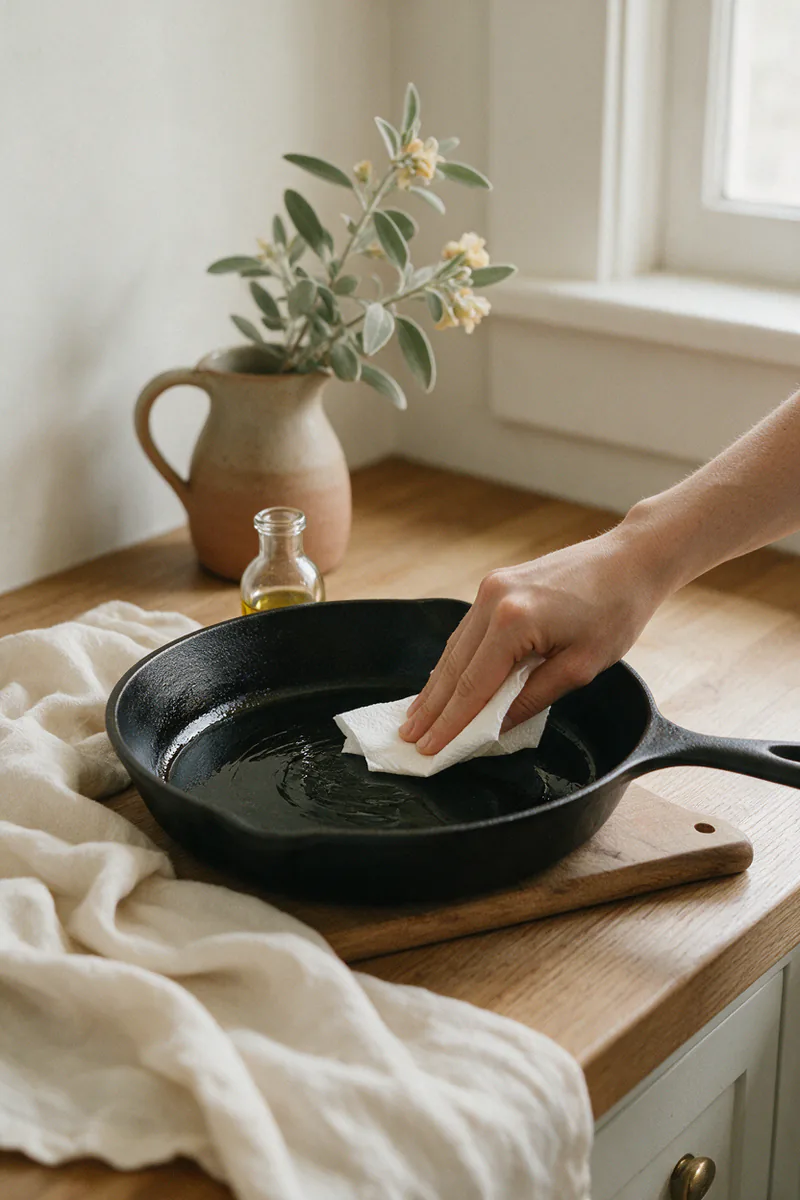
6Re-season when it looks dull
If the surface looks patchy, grey or sticky, give it a full seasoning in the oven. Wash and dry the skillet, rub a very thin layer of oil over every surface, including the handle and bottom, and wipe off the excess. Bake it upside down at around 450°F for an hour, with a sheet of foil on the rack below, then let it cool in the oven.
7Fix rust without panic
Rust looks alarming but is almost always on the surface. Scrub the rusty patch with steel wool until you reach bare grey iron, rinse, dry on the stove and re-season it in the oven. The pan will be ready to cook with again the same day.
8Store it dry and open
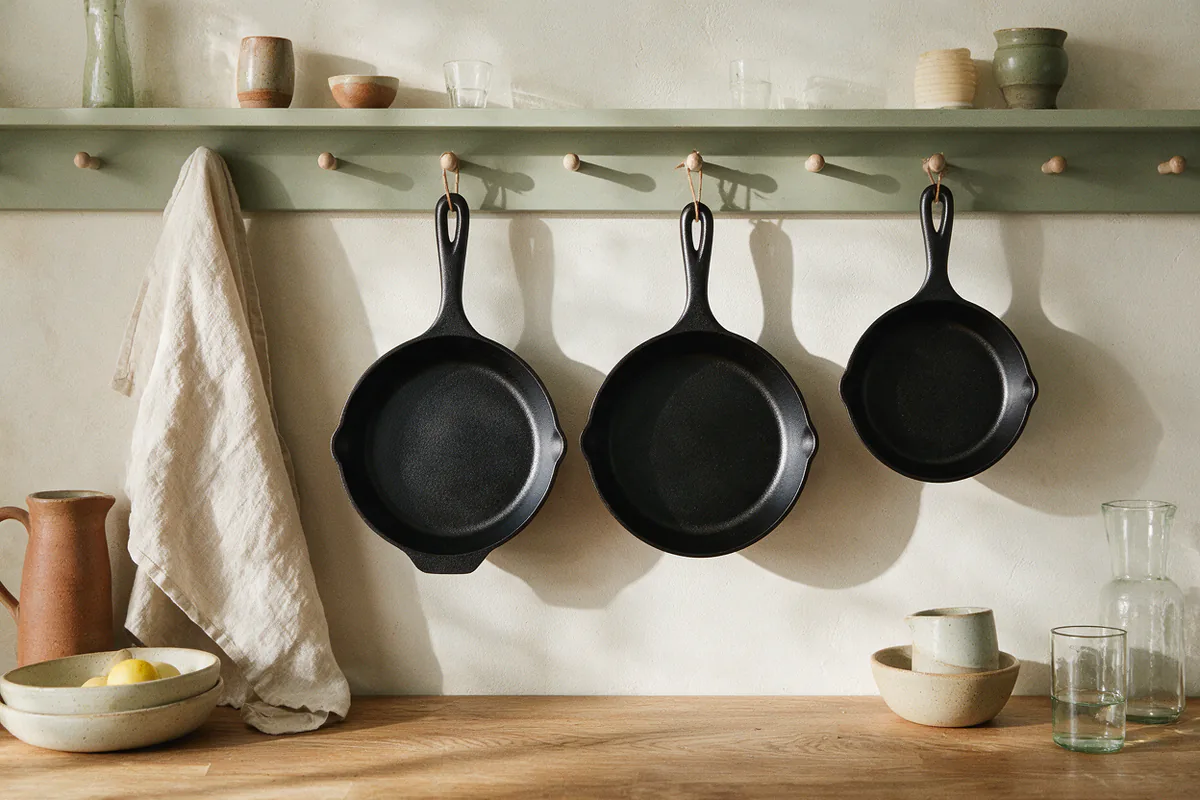
Keep cast iron in a dry cupboard or hang it on a hook. If you stack pans, place a paper towel between them to protect the surface and absorb moisture. Store it without the lid on, or with a towel under the lid, so air can move.
What to cook first
A newly seasoned pan loves fat. Start with bacon, fried potatoes, cornbread or seared vegetables. Long simmers of tomato sauce or wine can wear away young seasoning, so save those for later, once the surface is dark and well-established.
How to start
After you next cook in your skillet, try the full routine: rinse, scrub, dry on the stove and wipe in a thin layer of oil. It takes two minutes. Do it every time for a month and you will see the surface turn darker, smoother and easier to cook on.
Save it for later
Pin one of these to come back to the ideas when you need them.