Kitchen Drawer OrganizationIdeas That Actually Stay Tidy
Some links on this page may be affiliate links. If you buy through one, we may earn a small commission at no extra cost to you. Images are AI-generated illustrations of ideas, not photos of the products.
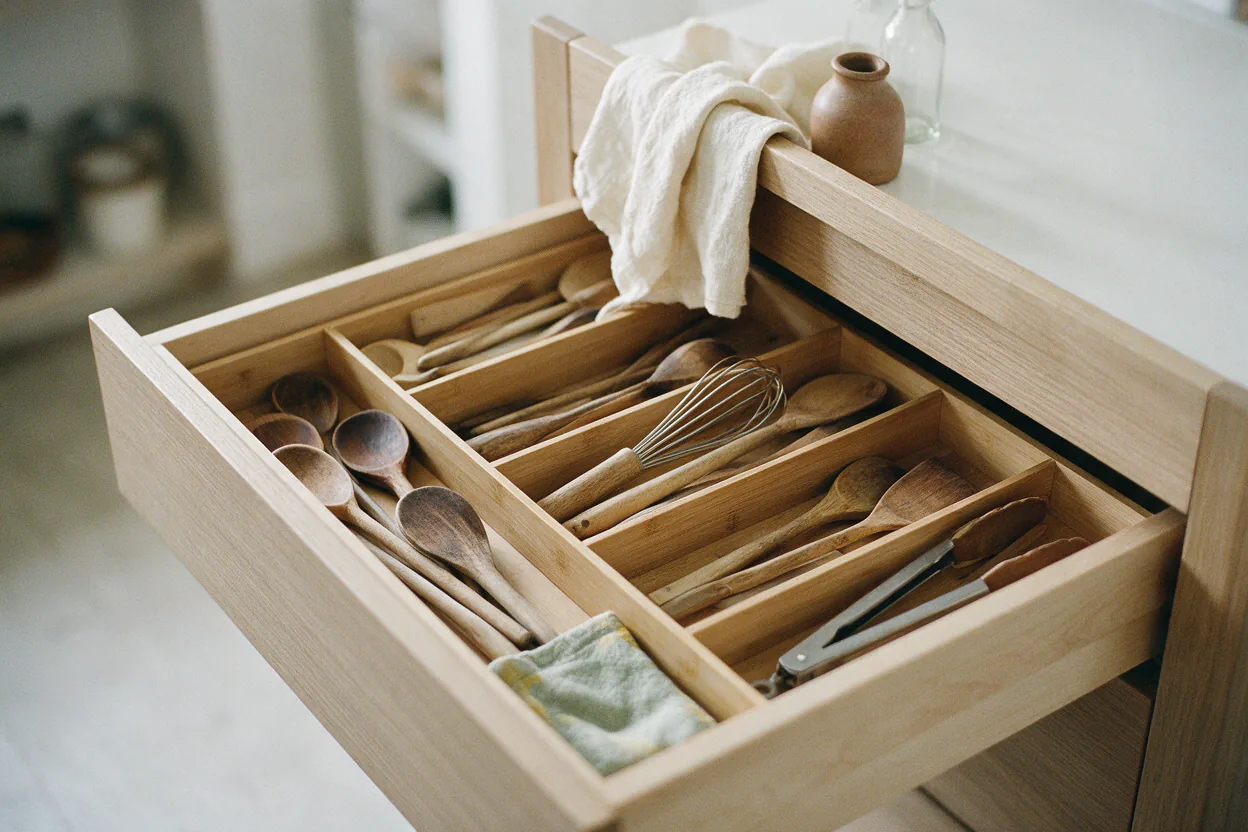
Kitchen drawers fill up quietly. A spare whisk here, a bag clip there, and soon every drawer is a mix of everything. Organizing them is less about buying containers and more about deciding what each drawer is for. Here is a simple way to do it that holds up over time.
1Empty one drawer at a time
Take everything out of a single drawer and lay it on the counter. Wipe the drawer clean. Doing one at a time keeps the job small enough to finish in twenty minutes, and you can see exactly what you have.
2Sort and let go
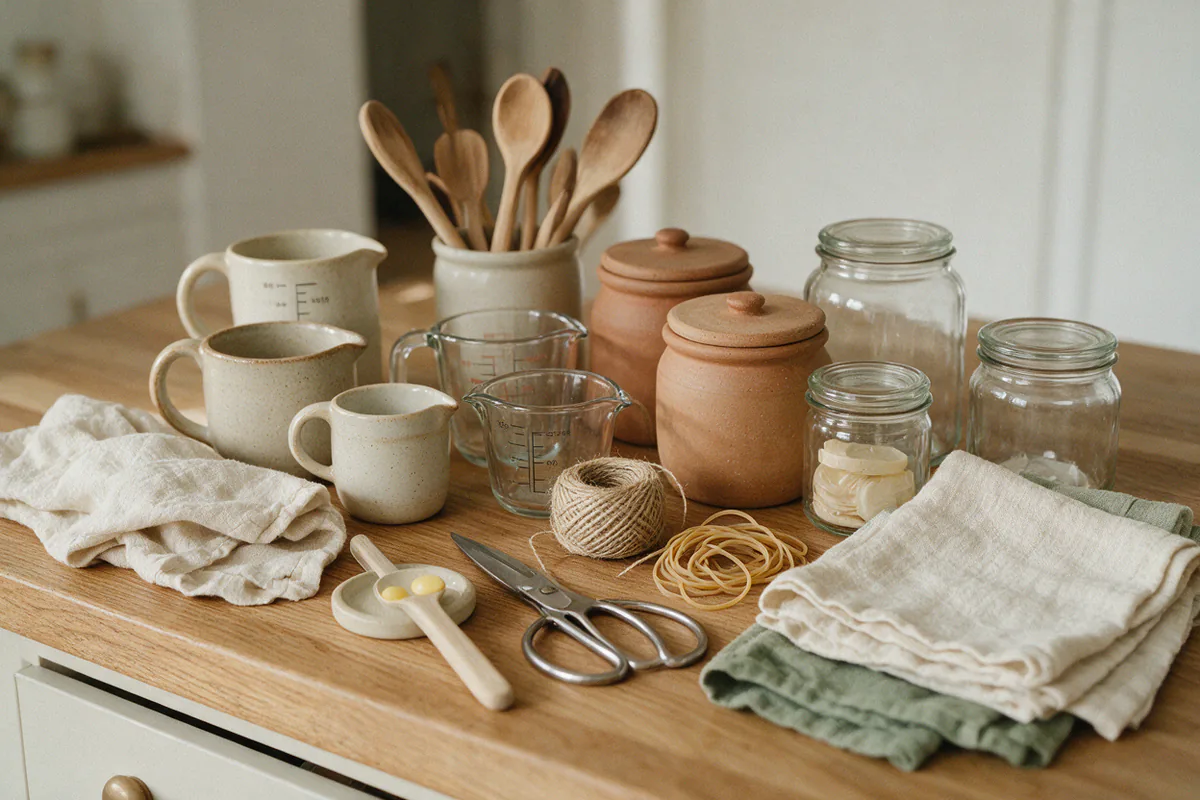
Group like with like: spatulas together, measuring tools together, small gadgets together. Then be honest. Keep the tools you used in the last few months, plus the occasional holiday piece. Duplicates, broken tools and mystery parts can go.
3Organize by zone
Put things where you use them. Spatulas, tongs and spoons belong in the drawer closest to the stove. Cutlery goes near the dishwasher or the table. Wrap, foil and food bags work best near the counter where you pack leftovers. Fewer steps means drawers stay tidier, because things go back where they belong.
4Measure before you buy dividers
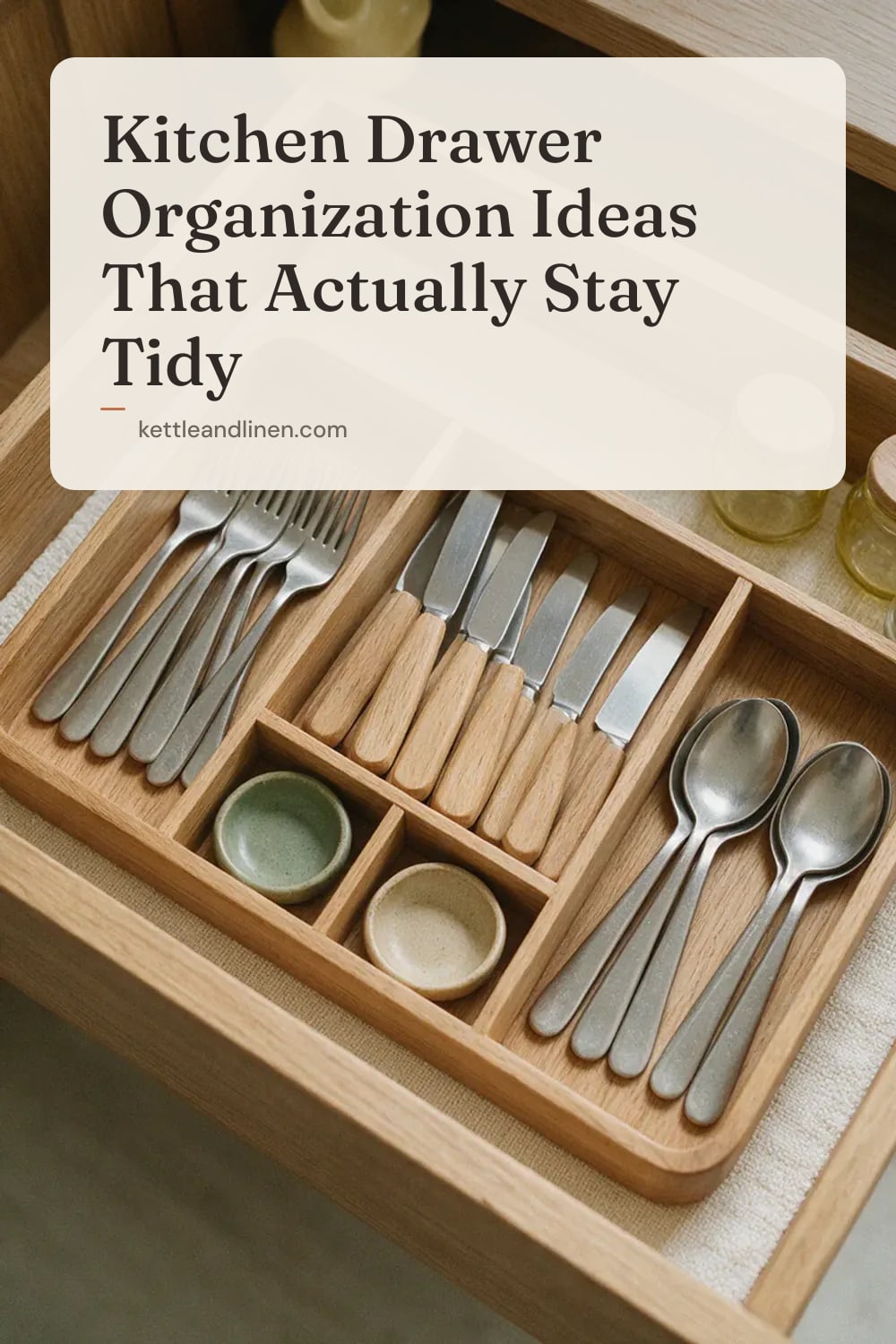
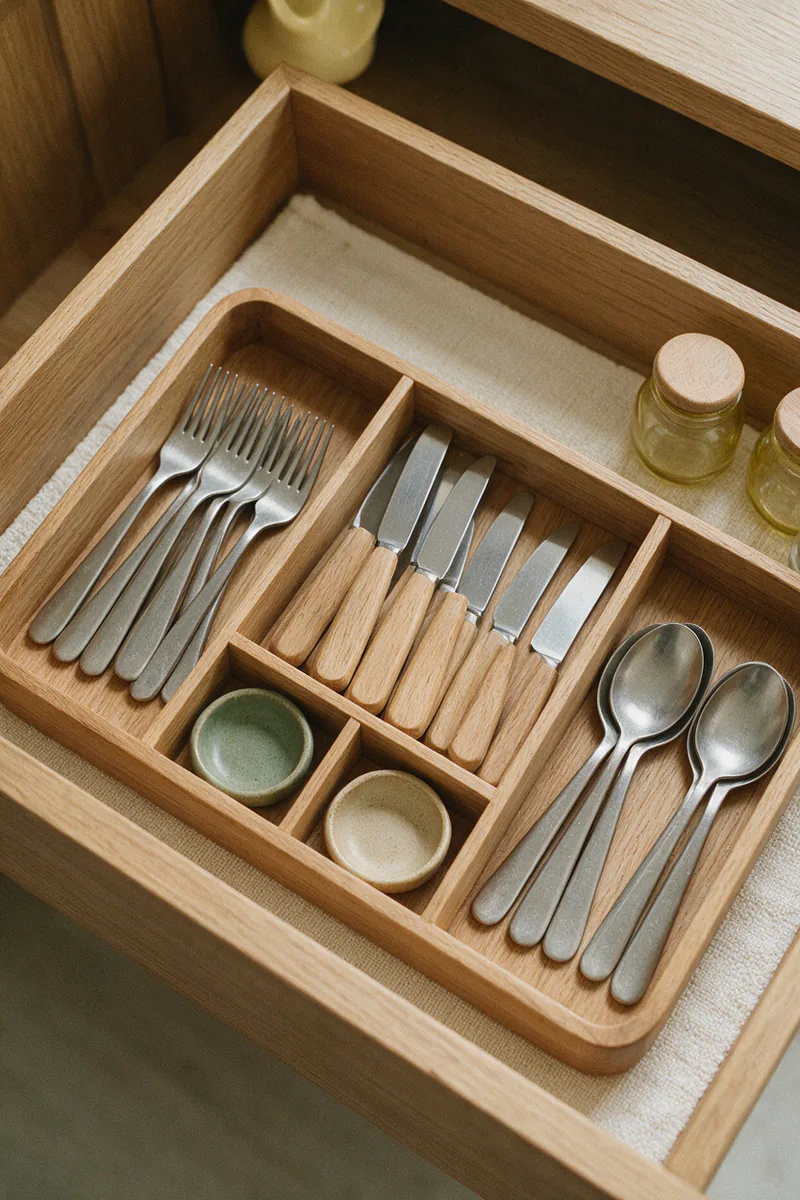
Measure the inside width, depth and height of each drawer before buying anything. Adjustable bamboo dividers suit most utensil drawers, and simple wooden trays work well for cutlery. Choose dividers that fill the drawer from edge to edge, so nothing can slide around.
5Keep knives safe
Loose knives dull quickly and are dangerous to reach for. An in-drawer knife block keeps blades separate and protected. If you prefer them on the wall, a magnetic strip works well too, and frees up a whole drawer.
6Use deep drawers for heavy things
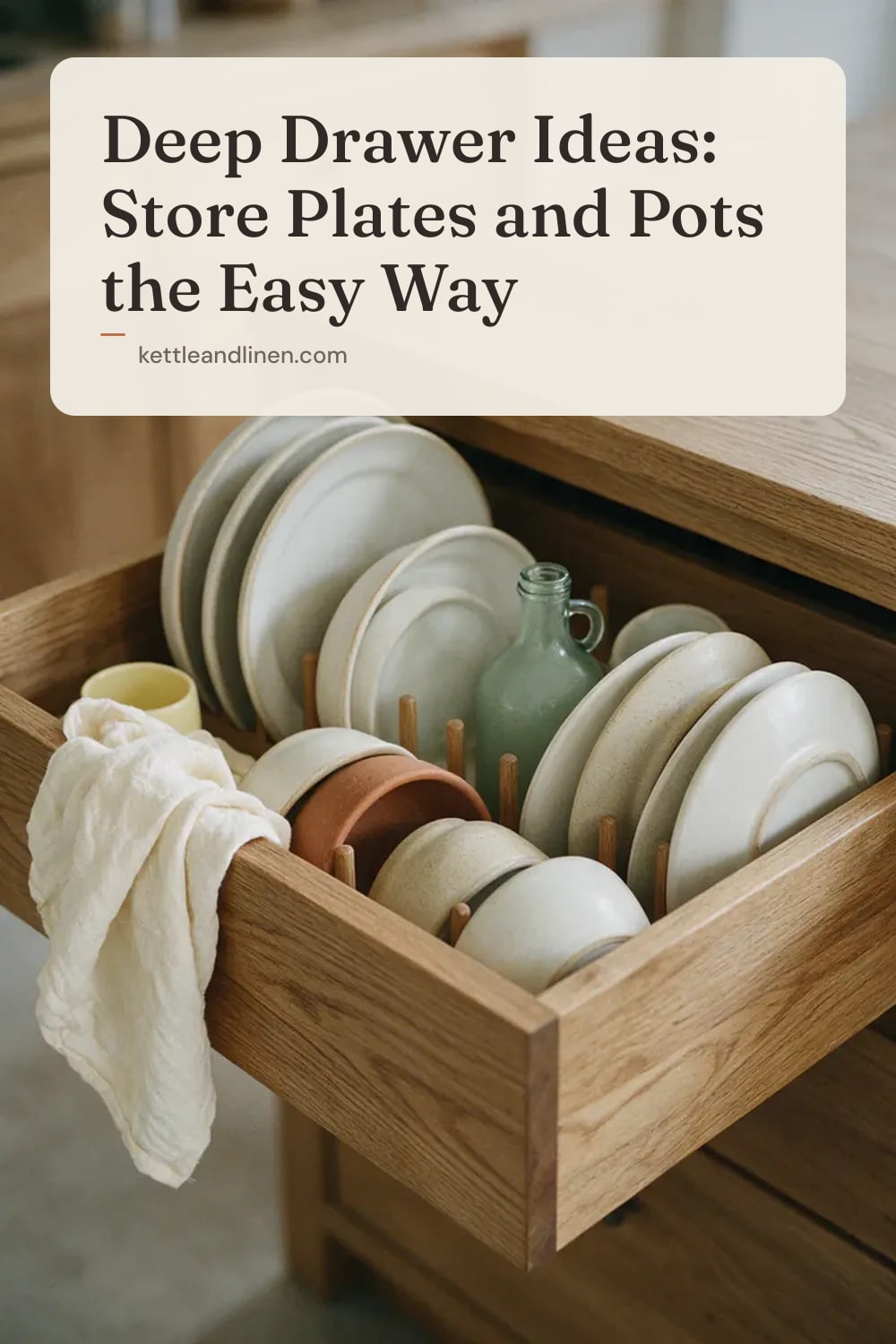
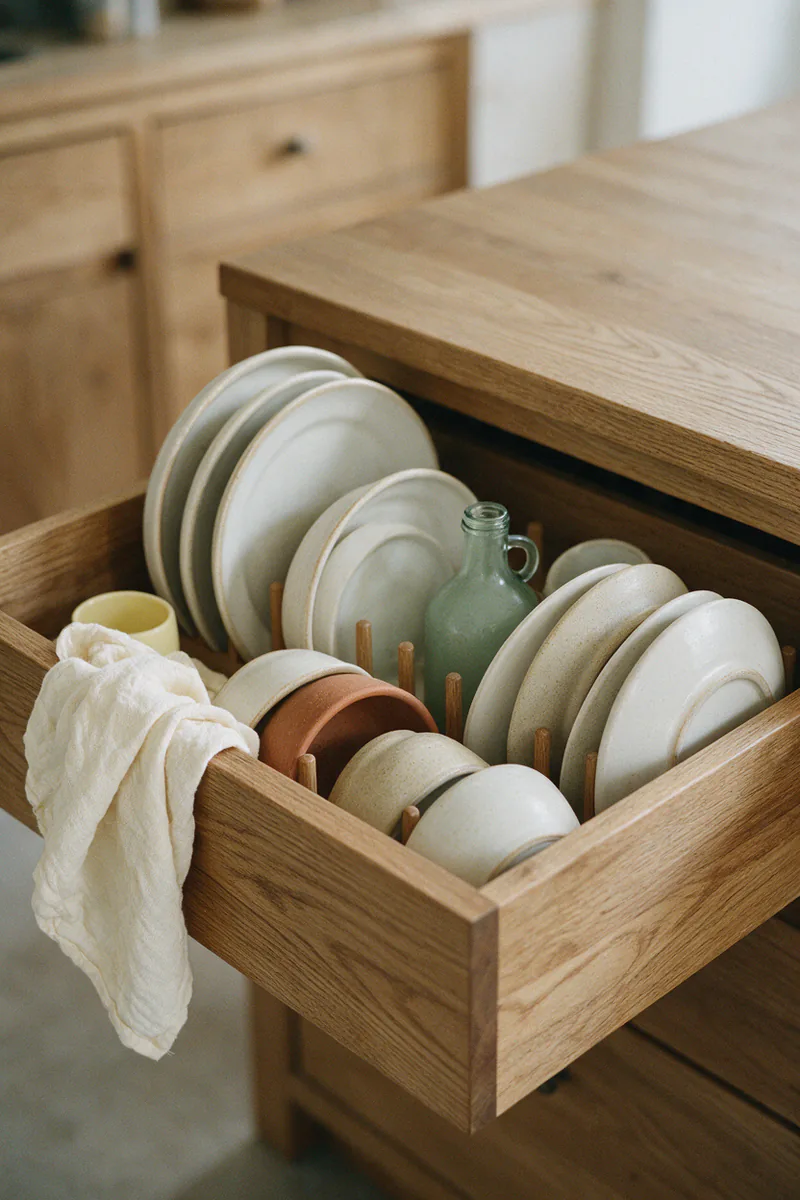
Deep drawers are ideal for pots, pans, mixing bowls and even plates. A peg system lets you stack plates and bowls upright without sliding. Store pot lids vertically in a divider at the back, and keep the heaviest items low, where lifting is easiest.
7Give the junk drawer rules
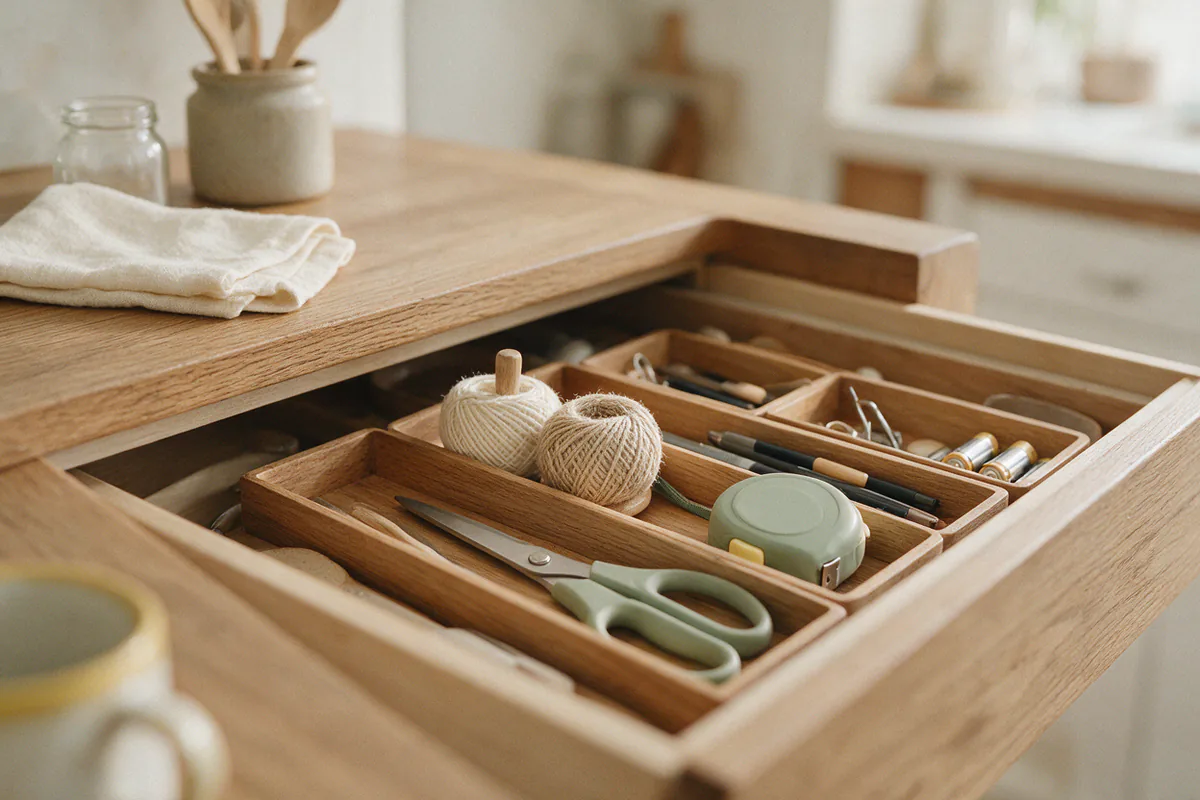
Every kitchen needs one drawer for scissors, tape, pens and rubber bands. Keep it, but give it small trays and a limit: if it does not close easily, it is time to sort. Batteries and takeout menus can live somewhere else.
8Line drawers for grip and easy cleaning
A thin, non-slip drawer liner stops trays from sliding and catches crumbs. It is easy to pull out and wash. Choose a plain, neutral one, so the drawer still looks calm when you open it.
Keep it tidy in two minutes a week
Once a week, open each drawer and put back anything in the wrong place. If a drawer keeps overflowing, it is a sign to move something to another zone or let a few things go. Small resets keep the system working without another big sort.
How to start
Choose the drawer you open most, probably the one next to the stove. Empty it tonight, sort it, and put back only what you use. Once you feel the difference, the other drawers will be easier.
Save it for later
Pin one of these to come back to the ideas when you need them.